Ways to Optimize Your Blood Sugar and Insulin Levels
Hooray! You’ve made it to the third post of the Gimme Some (Science About) Sugar Series. In the last two we’ve discussed how our bodies process sugar, what insulin and insulin resistance mean, and the effects of elevated blood glucose and excess sugar in the body. We’ve learned that too much sugar can have some serious health risks. Although the research linking elevated blood sugar to a wide variety of diseases can be scary, it gives us the knowledge to make choices that promote positive health outcomes. So let’s turn these facts into fuel for a healthier you!
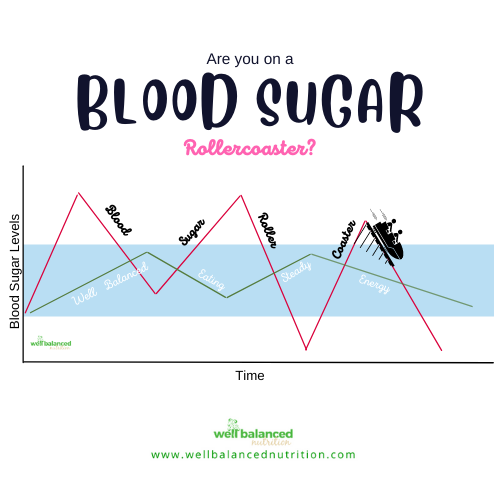
Blood sugar imbalances can feel like a rollercoaster ride.
How to Detect Blood Sugar Imbalances
Before we dive into optimizing your blood sugar levels, it’s important to know the common signs that your blood sugar may be on a rollercoaster ride (beyond what is normal after a meal). The common symptoms of blood sugar imbalances include:
mood swings
fatigue
large bursts of energy followed by a crash
trouble concentrating
weight gain
dizziness and headaches
excessive thirst and excessive urination
dry skin
blurry vision
cravings for sugary foods/drinks
Ways to Optimize Blood Sugar and Insulin Levels
Get Fiber Fueled
Fiber is a term used to describe any type of complex carbohydrate that our bodies cannot digest. Fiber slows the rate of digestion and absorption of carbs. This means your blood sugar will rise more gradually following a meal, and consistent intake of fiber can actually reduce our blood sugar levels in the long run, decreasing the risk of developing diabetes. Carbohydrates that are packed with fiber are always a great choice when you’re choosing a snack or meal planning.
Examples include raspberries, strawberries, leafy greens, beans and lentils, oats, chia seeds, peas (especially split peas), pears, apples, avocados, and broccoli
Eat Well Balanced Meals
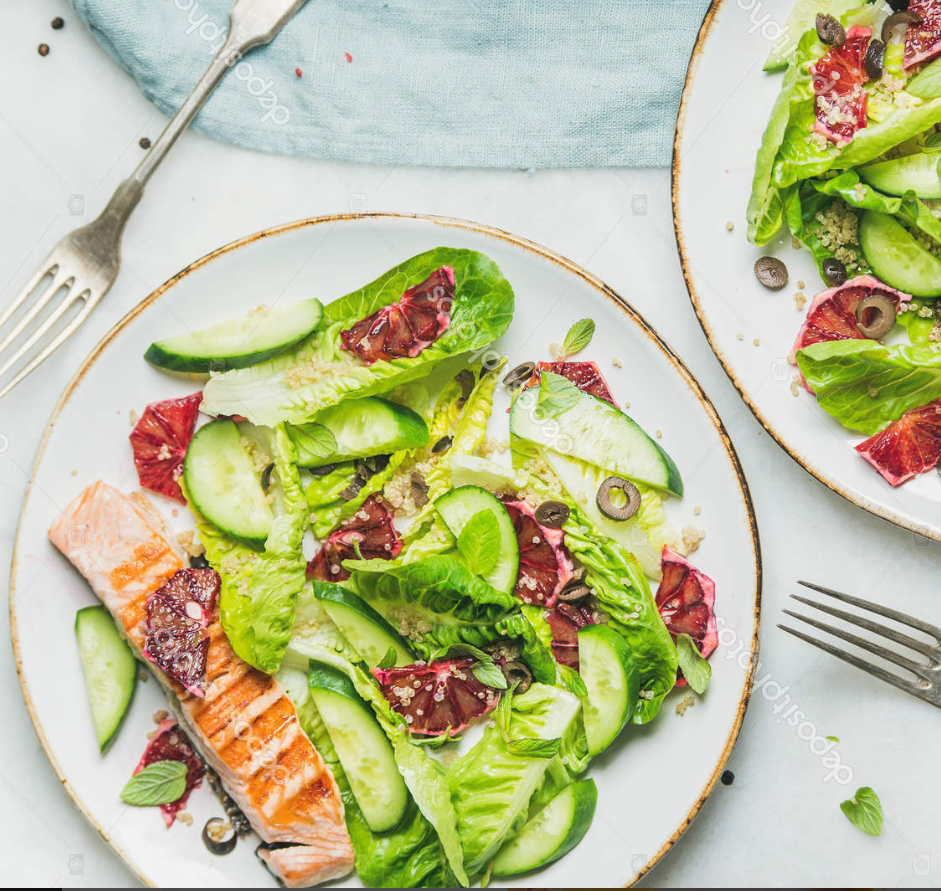
When planning a meal it’s best to have a source of protein, complex carbohydrates, and fat on your plate. Extra bonus points if one or more of the foods you choose is packed with fiber. Each of these nutrients helps stabilize blood sugar levels on their own, but they’re even better together. Team work makes the dream work!
Well Balanced Meal examples:
veggie omelette with whole wheat avocado toast
grilled chicken breast, a baked potato, and roasted carrots
black bean burger on a whole wheat bun with a side salad
Snack examples:
apple with peanut butter
veggies with hummus or yogurt dip
trail mix with dried fruit
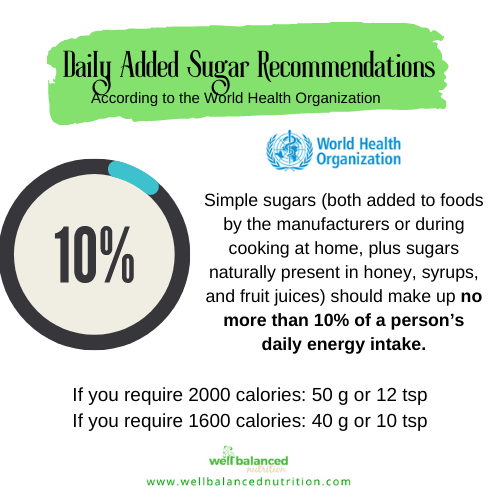
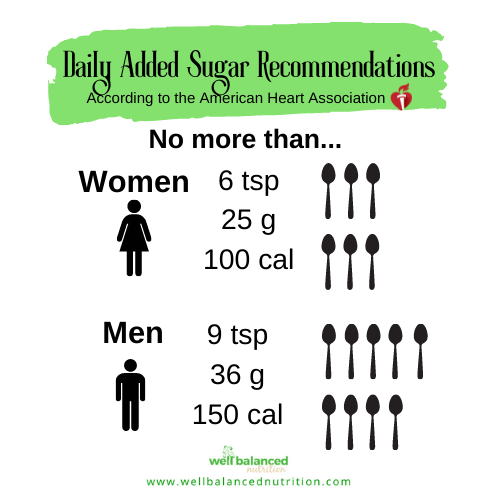
Watch Your Added Sugar Intake
To clarify, added sugar is anything that isn’t already in our foods (fruits, vegetables, and dairy products have natural sugars in them already), so when we talk about added sugar we are NOT referring to these. However, any type of sugar (table sugar, brown sugar, syrups, etc.) that is added to a food or dish for flavor purposes, is the added sugar we must be aware of.
Plan out your meals and snacks so you can gauge how much added sugar is in your week ahead
Avoid sugary drinks like sodas, juices with added sugar, or coffee/energy drinks loaded with sweet syrups
Enjoy sweets in moderation
Move After a Meal
Research has shown that movement after eating can help reduce the spike in blood sugar. Sports Medicine recently published a scientific review of over 50 studies analyzing how single bouts of exercise help control post-meal blood sugar. The review found that a single bout of aerobic exercise (aka cardio) resulted in lower blood sugar levels. The best part? The exercise only had to be about 30 minutes in length and still had optimal effects as long as it occurred within 6 hours of eating!
Exercise ideas:
Take a walk on your lunch break after you eat
Ride a bike whenever possible if you’re going out to eat, that way you have to ride it home after eating
Plan to eat before working out to not only fuel your muscles, but to optimize your blood sugar and insulin levels
Have a family dance party after eating
If you’ve made it through all 3 posts, thank you, and consider yourself a sugar specialist! However, our work here isn’t done yet. In the next (and last) post we are going to cover the different types of carbohydrates and discuss processed vs. natural sugars. See you next week!
If you are interested in learning more about the science of sugar, watch our free workshop on how to fit sugar in a well balanced diet: Watch the workshop!
Welcome back to The Gimme Some (Science About) Sugar series. In post 1 we covered the basics about how our bodies process sugar and how excess sugar can lead to weight gain. However, there are many other effects of a sugar surplus in the body, so let’s dive in!
What does too much sugar do to your body?
Insulin Resistance Might Develop
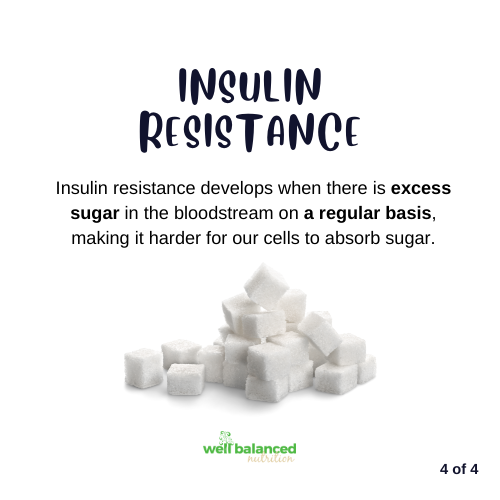
Remember that insulin is a hormone that helps regulate blood sugar by allowing our cells to absorb glucose. Insulin resistance develops when there is excess glucose in the bloodstream on a regular basis, reducing our cells ability to respond to insulin and absorb glucose.
As a result, our pancreas begins to produce more insulin so our cells will be able to allow glucose in. Our blood sugar levels will stay in a healthy range as long as the body produces enough insulin and our cells respond to it.
It is when the pancreas no longer produces enough insulin or our cells continue to be less responsive to insulin, that we can become insulin resistant and at risk of developing prediabetes (when our blood glucose levels are above the normal range but not in the diabetic range*).
Although insulin resistance and weight gain get the most attention when it comes to discussing the risks of excess glucose in the blood, there are other effects that are equally important to discuss. There are 3 that we will focus on for the sake of time.
Big spikes in glucose can cause Inflammtion
The body senses a lot of glucose in the bloodstream and it starts to believe something might be wrong. Our bodies then respond to this threat by triggering inflammation. But why is this inflammation harmful? An article by Vanderbilt’s School of Medicine put it best, “Inflammation also antagonizes the action of insulin, the hormone that stimulates muscle and liver to absorb glucose from the blood. And obesity, insulin resistance and type 2 diabetes, in turn, increase the risk for heart disease.”
High levels of glucose in the blood cause a process called glycation.
Dr. Casey Means of Levels described glycation perfectly in a recent podcast saying, “glycation means glucose starts sticking to things in the body such as blood vessels or proteins.” When sugar sticks to things it starts to cause dysfunction and things in the body will work less efficiently. Dr. Means used the example of the wrinkling of our skin due to glycation of collagen. In other words, consistent large spikes in glucose (above what is healthy*) can accelerate the aging process by glycating the collagen in our skin.
Oxidative stress can occur.
When we dump a lot of glucose into our system, we strain the energy producing pathways in our bodies. This can lead to the production of free radicals in the body that cause damage to our cells, organs, and much more.
Steps you can take to prevent insulin resistance and damaging effects of sugar surplus include:
Moderate activity for at least 30 minutes – 1 hour, 5 times a week is great. Adding in more difficult activities like weight lifting, cycling, or endurance training 2-3 times per week is even better
Maintain a healthy weight
The number on the scale does NOT define you, but staying within a healthy range that is unique to your body can definitely help prevent insulin resistance and other health risks
If you are interested in learning more about the science of sugar, watch our free workshop on how to fit sugar in a well balanced diet: Watch the workshop!
*According to the American Diabetes Association, the normal range for blood glucose 1-2 hours after a meal for individuals without prediabetes or diabetes is 140 mg/dL. For those with diabetes it is 180 mg/dL or higher. Fasting blood glucose for healthy individuals should be below 100 mg/dL, in prediabetes the range is 100-125 mg/dL, and in diabetes it is 126 mg/dL or higher.
What does science say about sugar? Is it really that bad?
Sugar. It’s famous for its sweetness and shamed for its health effects. But why is that? Most of us know sugar can be “bad” without really knowing why.
Over the course of this series of blog posts, we will cover:
how the body processes sugar and if sugar causes weight gain
insulin and insulin resistance
what excess sugar does to the body
ways to optimize your blood sugar and insulin levels
different types of carbs and natural vs. processed sugars
Let’s start with the basics.
Sugar is a type of carbohydrate. There are different sugars present in our foods. When we refer to sugar in this series, we are talking about:
Fructose and Glucose – the sugar found in fruits, vegetables, honey, but also in food products like syrups made with a combination of fructose and glucose
Sucrose (aka table sugar) – occurs naturally in sugar beet, sugar cane, and fruits
Lactose – a sugar found in milk and dairy products
These sugars are made up of only one or two sugar units (compared to 10 or more units in other carbohydrates). This is why they are sometimes called simple sugars or simple carbohydrates. Complex carbohydrates are made of many sugar units and take longer to digest than simple sugars.
What happens in your body when you eat sugar?
When we eat simple sugars, our body breaks the sugar units apart fairly quickly and they can get used immediately upon digestion.
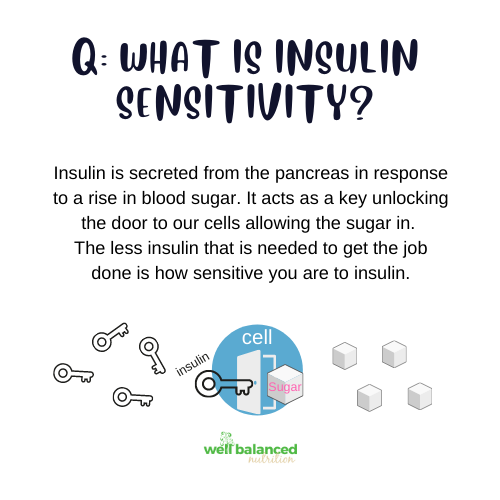
Your body will notice the influx of sugar in your blood and produce a hormone called insulin. Insulin acts as a key unlocking the door to our cells allowing the sugar in. Cells will use the sugar for energy. Once your cells have enough fuel any excess sugar will be stored in your muscles, liver, or tissues.
Do we need sugar?
Our bodies need glucose (blood sugar) for fuel, but it doesn’t have to come from simple sugars. We can turn other carbohydrates into glucose. We need about 130 grams of carbohydrates a day to support brain health and give our bodies enough glucose for fuel.
What happens in your body when you eat too much sugar?
Too much (or too little) sugar in the bloodstream will trigger reactions in the body that will help restore a healthy blood sugar level. When sugar is over-abundant in the blood and your cells no longer need it for energy, your body will allow more sugar to be used up by muscles, send some to the liver for storage, and will temporarily prevent any breakdown of previously stored energy. If there is still extra sugar in the blood after that happens, our bodies can store the sugar as fat.
Will eating sugar cause weight gain?
If we consistently eat foods or meals that cause excess sugar to circulate in our blood, we increase our fat stores. However, this does NOT mean that eating sugar guarantees you will increase your fat stores. It does mean that eating and drinking an overabundance of foods high in simple sugars (donuts, white bread, candy, sugary cereal, sodas) can lead to a flood of sugar, causing our bodies to store the glucose in muscles, liver, or as fat.
It is only when we consume too much sugar too often that we can begin to gain weight and start to experience negative effects. However, there are ways to optimize your blood sugar levels that prevent weight gain (more on this later).
Over the next few posts we will cover more effects of excess sugar in the blood, insulin and insulin resistance, tips for optimizing your blood sugar, and breakdown the different types of carbs. Stay tuned for more sweet stuff!
Feeling a little foggy or dragging through your day? Before you assume it’s burnout or bad sleep, ask yourself: Have I had enough water today?
Water might not be flashy, but it plays a starring role in your energy, focus, digestion, and even mood. At Well Balanced Nutrition, we believe hydration is one of the simplest ways to support your body, especially when life gets busy and wellness feels hard to keep up with. Let’s break down why water matters and how to make it easier to drink up.
What role does water play in the body?
It helps perform chemical reactions and maintain important structures in our cells. Water in the body helps regulate temperature, keep joints lubricated, nourish the brain and spinal cord, and is an integral part of our metabolism.
Why is water so important?
Since the body relies on water for many vital processes, without enough to go around all systems must work a bit harder to do their normal job.
We lose 60-100 ounces of water every day through normal processes like sweating, urinating, and even breathing. If we don’t replace these losses we can see negative consequences like decreased focus or cognitive function, mood fluctuations, headaches, dry skin, and constipation.
What are the benefits of drinking water?
Just like a car runs better with adequate oil and gas, your body runs best with adequate water and calories. Drinking water is not a magic bullet for health, but it is an important and often overlooked requirement for a high functioning mind and body. Drinking enough water promotes healthy digestion, supports mental focus, can aid in weight loss, prevents headaches, lubricates joints, and keeps skin moist.
How much water do I need to drink?
It depends on many factors such as your age, gender, activity level, and overall health. Adequate intake levels for water have been determined for generally, healthy people and are based on age and gender.
For women, the amount of total water is about 11.5 cups per day.
For men about 15.5 cups.
Total water estimates, however, include fluids consumed from both foods and beverages, including water. If eating a healthy diet you typically get about 20% of the water you need from the food you eat. Taking that into account, in order to help replenish normal water loss:
women need to drink about 9 cups of FLUIDS per day
men need to drink about 12.5 cups of FLUIDS per day
If you are pregnant or breastfeeding, you’ll require more water. Individuals with certain health conditions, such as congestive heart failure or renal disease, also have different fluid needs. The same is true for those with serious infections or diarrhea.
What foods are high in water?
Foods with a 90-100% water content include:
Fruits – cantaloupe, strawberries, and watermelon.
Vegetables – lettuce, cabbage, celery, spinach, and cooked squash.
Foods with a 70-89% water content include:
Fruits – bananas, grapes, oranges, pears, and pineapples.
Vegetables – such as carrots, cooked broccoli, and avocados.
Dairy products – yogurt, cottage cheese, and ricotta cheese.
How do I know I’m getting enough water?
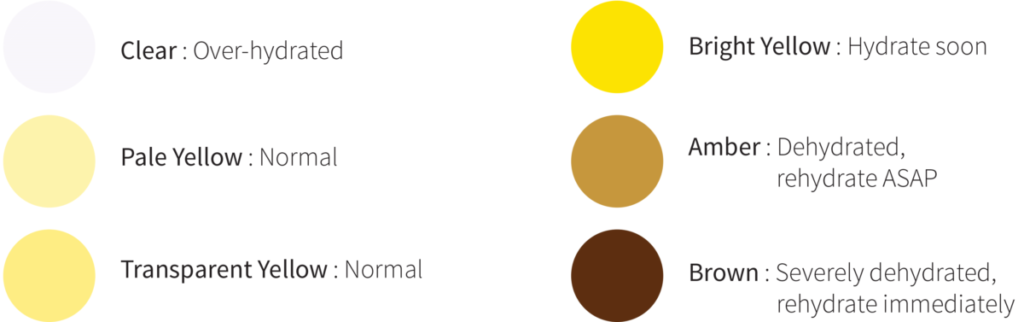
A quick and easy way to check if you are getting enough water overall is to take a peek at the color of your urine. If you are consuming enough, the urine color will be a pale yellow color. If it is a dark yellow or amber color, you may need to increase the amount you consume.
Source: Examine.com
What else counts toward fluid/water intake?
It was once thought that coffee and tea shouldn’t count toward hydration goals. Coffee and other caffeinated drinks do make you urinate more, but overall, they’re hydrating because of their water content. Milk is a very hydrating drink. Juices, sodas, and other sweetened drinks are also hydrating, but they contribute sugar and calories you may not want. Water is usually the best choice for hydration because it doesn’t have extra calories.
Does bubbly water count toward water intake?
Bubbly water is mostly a healthy way to shake up the monotony of plain water. It shouldn’t completely replace plain water so don’t drink it exclusively. Try alternating it with regular water. Keep in mind, not all sparkling waters are created equal. Club soda, tonic water, and some flavored varieties can contain added sodium, sugar, and artificial sweeteners. For this reason, be sure to know what’s in your favorite sparkling water. Read the labels.
What about electrolytes?
When we sweat, especially during exercise or in the summer heat, we’re not just losing water. We also lose electrolytes like sodium, potassium, magnesium, and chloride, which play a critical role in fluid balance, nerve transmission, and muscle function. For most people, a balanced diet with fruits, vegetables, dairy, and whole grains provides enough electrolytes. But for active individuals, those who eat very little sodium, heavy sweaters, or people with gastrointestinal losses (vomiting, diarrhea), additional electrolyte support may be helpful. Your dietitian can help tailor hydration and electrolyte strategies based on your health status, medication use, and activity level to prevent symptoms like fatigue, cramping, dizziness, or irregular heartbeat.
Bottom line:
Your body is constantly working behind the scenes, regulating temperature, powering your muscles, and fueling your brain, and it depends on water to do all of that well. Staying hydrated doesn’t need to be complicated or perfect. Start by paying attention to your thirst, checking your urine color, and finding fluid sources you enjoy. Whether it’s a glass of water, a hydrating meal, or a bubbly beverage with a splash of citrus, every sip counts.
Let this be your reminder: Your body deserves the support. Drink up—you’ve got things to do, and water helps you do them well.
As the holiday season revs up, we often look forward to our favorite festive foods. However, sometimes those delicious dishes can wreak havoc on our digestive system. Not to mention that the lack of regularity in our schedules, routines, and eating habits during this time of year can lead to irregularity in our bowel movements. However, holiday cheer doesn’t mean you have to feel bloated, constipated, or crampy! That’s why I (Bella) teamed up with our friend Dr. Norah from Functional Pyhzio to come up with some ways to help you beat the bloat (and more) this holiday season. What we put in our bodies influences what comes out of our bodies. Here are some things to add to your stool tool box:
Stay hydrated – If constipation is a main complaint, you might not be drinking enough water throughout the day. Dehydration means our intestines don’t have enough water and can lead to dry, lumpy, hard stools.
Try and aim for at least 8 glasses of water per day to combat constipation
Set a reminder on your phone if you often forget about water throughout the day
A great “hack” is to drink at least one glass of water as soon as you wake up (or at least before coffee) to start of the day the hydrated way
Add more fiber – There are two types of fiber: soluble and insoluble. Soluble fiber dissolves in water and slows digestion, allowing us to absorb more nutrients. Insoluble fiber doesn’t dissolve in water, adding to fecal bulk and softening stool, making it easier and less straining on our bowels when we go number 2. Typically the rule of thumb is that insoluble fiber is great for constipation and irregularity and soluble fiber is good for both diarrhea and constipation.
Sources of soluble fiber: oats, apples, beans, bran, and barely
Sources of insoluble fiber: wheat bran, beans, whole-wheat flour, potatoes, cauliflower, and many other veggies
Adding nuts and seeds (especially chia and flax seeds) on top of yogurt, oatmeal, salads, or to smoothies can be an easy way to sneak more fiber into each meal
Keep movin’ – Physical activity is a great way to support your digestive system and keep you regular. Our intestines have natural movements that move stool through our bodies. However, exercise can be the push our bowels need if things start to slow down.
A short activity that’s about 15 minutes long may be all that you need to get those bowels moving
Consistent exercise promotes consistency in our bowel movements
Ditch the irritating foods – If you find your stools to be looser than normal, then you may be consuming food or drinks that irritate your insides.
Caffeine, alcohol, sugar alcohols (sorbitol, xylitol, mannitol), spicy, and fried or fatty foods are common culprits
However, everyone is unique and may have foods that are personally triggering. Try and keep a record of what you eat and drink if you are having loose stools regularly
Nutrition isn’t the only way you can manage your symptoms. Oftentimes things like toileting posture and muscle tension/relaxation are overlooked. That’s why we love these suggestions from Dr. Norah’s recent blog post:
“Toileting posture – when you’re sitting on the toilet (pee or poop) it’s important that you can fully relax and that you are comfortable.
Place your feet on a step stool (the squatty potty is the best) to your knees are higher than hips
Pelvic Floor Relaxation – When the pelvic floor muscles can’t relax it makes it much harder to go.
To work on pelvic floor muscle relaxation lay on your back with your feet together and knees comfortably out to the side
Take a deep breath in and imagine your lungs are in your pelvis. Feel your hips and pelvic floor relaxing as you breathe in and out.”
Don’t let diarrhea, constipation, or belly discomfort get you down this holiday season. Next time your symptoms start to act up, try out these simple techniques so you can be jolly all season (and year) long.
Shopping for presents for friends and family can be a dreaded task during a busy
holiday season. We’ve made it easy for you this year by creating a gift guide (or wish
list) for you with must-have items that make a healthy lifestyle convenient.
Crate and Barrel Veggie Ricer: This is a simple yet helpful kitchen item. It allows you to
make fluffy rice out of your favorite veggies. Freshly riced cauliflower is less soggy
than the store-bought frozen cauliflower rice and makes a great base for numerous
dishes.
Brimma Water Bottle: Drinking enough water throughout the day can get boring. The
Brimma water bottle allows you to add natural flavor to your water by infusing
fruits, herbs, or veggies of your choice. Some great combinations are cucumber and
lemon, pineapple and strawberry, blueberry and apple, or mint.
Food Chopper: This portable food chopper makes food prep easier and faster. It takes
away the hassle of cutting food and makes cooking more efficient, liberating your hands
from the dreaded task of chopping or mincing.
Vegetable Spiralizer: Spice up your pasta night by swapping the spaghetti with veggie
noodles. This fun little machine turns plain ole veggies into noodles within seconds! It’s
a helpful tool for adding more veggies to your diet while making food prep quick and
easy.
Prepdeck: Meal planning and prep is often the biggest obstacle to eating healthier. The
Prepdeck helps you plan and prep meals with an organized station including over 45
tools and features including 15 containers stored in the unit, a cutting board, grater,
zester, slicer, juicer, garlic crusher, peeler, julienne peeler, green stripper, and a bottle
opener! Who wouldn’t want this?!
Meal Planning That Works: If you or your loved one gets excited about making life in the kitchen easier, smoother, and more efficient – this course is one to not miss. Become a pro and have all the tools and cheatsheets at your disposal for making healthier, tastier, homemade meals happen. Give it as a gift or grab it for yourself! Black Friday Sale: Take 70% off with code: HOLIDAY2021
The holidays are quickly approaching which means it’s time for all things food, family, and friends. These seasonal festivities can be both cheerful and stressful. Whether you’re looking forward to a full house and a full belly or slightly dreading it, understandably, from Thanksgiving to New Year’s Day our health sometimes gets put on the back burner. But the holidays don’t have to be hard on your health. That’s why the greatest gift you can give yourself this holiday season is to do it the Well Balanced way. Here’s how:
Walk it off:
It’s all about regulating and controlling insulin. Elevated levels of insulin can have a major impact on your metabolic health. Studies have shown that simply going for a walk (or movement of any kind) after a meal helps regulate blood sugar and reduce the overall increase in insulin. Encourage your friends and family to get on their feet after any feast!
Don’t be like a turkey and overstuff yourself:
There are lots of meals to be had this time of year, but make sure you give your body time to digest in between. If we eat too much too frequently, we often end up eating more than we need and feel overstuffed. It is also important to slow down and savor the food you’re eating to prevent rushing through a meal. The more mindful we are of the food we’re eating, the more we can enjoy it.
Don’t be like Santa and eat all the cookies:
Portion control is your best friend when it comes to those holiday dishes. But just because you want to stay healthy doesn’t mean you can’t have a Christmas cookie. Remember it’s about moderation. A great way to reduce your portions is to opt for a smaller plate. This will allow you to eat the foods you enjoy while making sure your portions are reasonable. And when it comes to the sweets remember that one is fun! Whether it be one cookie, one slice, or even one bite, it’s important you enjoy all the treats within reason.
Gift yourself with personal time:
Self-love is the best love! Don’t forget to love yourself this holiday season. Taking a moment to check in with yourself, whether it’s a 10 minute walk or reading a few pages of a book, will help you remember to take time each day to prioritize yourself.
Deck the Halls with Hydration
This time of year is filled with festive beverages, which means water sometimes gets forgotten. It is important to remember to hydrate all day and have a glass of water for every alcoholic beverage to avoid dehydration. Following up a glass of wine or cocktail with a glass of H2O is an easy way to space out your spirits and meet your water needs.
Don’t skip out on sleep
It’s easy for our sleeping schedules to get thrown off by all the holiday cheer. However, getting a consistent 6-8 hours of sleep per night during the holiday season will allow you to feel energized for wrapping, cooking, and attending events. Studies have proven that sleep is often the missing key for achieving weight loss or health goals, making it extra important for you to sleep like a Christmas baby the next few months.
Imagine sitting down at your team meeting conference table at 8:30 am. You smell a lovely free buffet-style breakfast and can’t wait to dig in. Now you are told to get your breakfast plate together and sit back down but don’t start eating yet. This is how my (Lucy’s) first experience with mindful eating began. It was an interactive demonstration that our former director graciously coordinated for the Nutrition team.
Meanwhile, I’m sitting in front of my hot oatmeal thinking “okay lady, my oats are getting cold…” We were told to close our eyes and assess how hungry we feel on a scale of 1-10… and the oats got colder. Then, we were instructed to look at the food and smell it. Decide what we liked about the food on our plate (or bowl in my case). Now I’m thinking “I don’t care! I just want to eat.” Finally, she gave us permission to eat our first bite. Only one bite then set the utensil down to notice the taste, texture, temperature, etc.
All the while, we were sitting in the dark and not allowed to speak to our neighbors or have any distractions. We continued at this glacier pace of eating for the next 15 minutes – in dark silence. After about 7 minutes I got on my iPhone under the table and posted on Facebook that clearly, mindful eating was a new form of torture that I would not recommend.
For a bit of background, up to this point in my life, most of my meals were eaten while on the way to school or work, sitting at my desk, in front of the TV, or while socializing with my friends or family. So the idea of getting quiet and tuning into my hunger was completely foreign to me!
Fast forward several years, many books, and self-exploration later, I’ve come a long way. Since then, I have adopted my own mindful eating habits that are much less involved than the demonstration and can be done more easily in everyday life.
What is Mindful Eating?
It’s more than just slowing down. Eating mindfully is about awareness and intention. It calls for deliberate engagement on our part. It is making thoughtful decisions on what we gather, shop for, and select. The absence of mindful eating is eating with distraction, on autopilot, or letting your environment be the sole influence for your food choices. When we learn how to be mindful eaters, it allows us to make meaningful, clear choices about the food we’re eating and why.
What are the Core Principles of Mindful Eating?
Mindful eating can be a challenging topic for a lot of people, mainly because they are unsure of exactly what mindful eating means. The core principles of mindful eating are simple:
Bring awareness to nourishing properties of food through the process of food preparation and consumption
Select enjoyable and nutritious foods
Acknowledge food preferences non-judgmentally and give permission to enjoy fun foods
Recognize and honor physical hunger and satiety cues
Use wisdom to guide eating decisions
Mindless Eating
You can’t talk about mindful eating without discussing mindLESS eating. Mindless eating involves looking at environmental cues and triggers around eating and recognizing that you are often eating on autopilot. Without awareness and intention, your choices can easily be influenced by the outside world. This happens a lot when you are…
eating on the run (in the car)
eating while distracted (TV, phone, computer)
eating from large plates and/or buffet style
alcohol consumption and eating
Mindful eating involves making adjustments to avoid these triggers that may compel us to eat an unbalanced diet, eat too much, or both.
How do you practice mindful eating?
Here are Well Balanced Nutrition’s favorite tips for overcoming mindless eating using tools and adjustments you can make in your daily life.
Sit and savor your food – try not to eat standing up or at the counter. Make a true effort to sit at the table while eating.
Eat off of a plate [not out of the bag] – this will help you recognize and enjoy the food you’re eating by seeing what food is truly in front of you.
Do your best to avoid electronics when eating – focus on your meal by putting away the cell phone or TV – at least for a few minutes.
Eat from smaller plates or start with smaller portions. You can always refill after a mindful check-in with yourself.
Stock your environment with Well Balanced choices that you’re excited to eat.
How to become a more mindful eater?
It takes time and practice. Let us guide you on that journey with individual sessions. We’ll share strategies, help you take action, and keep you moving forward. Book a clarity call to get started today.
Who would have thought we’d be here? Suffering as a nation. Hunkering down for the safety of one another. Trying to stay connected while social distancing. Working, teaching, and schooling from home. Praying for the essential workers who are on the front lines and keeping the world going to the best of their ability.
During this crazy time, Well Balanced Nutrition is here to support healthy habits, provide clarity around food choices, and help you overcome stress eating. We know that change is tough. Adjusting to your new normal at home may be challenging. That’s why we are here to support our communities in Durham and Clemmons, North Carolina. We have the wellness tools and strategies that will help bring a bit of balance back to your life, help you feel comfortable and in control around food, and manage the stress and anxiety that this situation brings.
How can I keep my food safe during COVID19?
The Nutrition Source from Harvard Health has the low down on food safety. This article provides the answers to your questions including how long does coronavirus live on surfaces?
Try These Strategies for Managing Emotional Eating
We asked and we heard you say that being so close to your kitchen all day long is hard. The fun snacks are calling your name and the stress can lead you down a slippery slope of emotional eating. Here are some strategies you will find helpful as you try to manage those urges. Remember to be kind to yourself! We are all human and Well Balanced eating is not fail-proof. (Start here. If you are new to Well Balanced Nutrition or just need a refresher, start here with What the Heck is Well Balanced eating?)
Meditation is a great way to feel all the feels, release some of the anxiety and find your center again. Several companies have shared free resources to help you continue or start a mindfulness and meditation practice during COVID.
Running out of fresh Fruits and Veggies? How do you maintain a colorful diet full of produce when you are trying to avoid multiple trips to the store? One solution is to have your produce delivered! Below are several options or you may have a local farm near you that has a delivery box.
Hungryroot – get prepped veggies, sauces, and proteins delivered to your door
Winston – Farm Fresh Box to pick up at Saturday’s Cobble Stone Farmer’s Market.
If you buy more fresh produce (and other food items) than you can eat, make them last by sticking them in the freezer. Here is a resource to help you know what foods you can freeze and how.
Working with an extra tight budget now? Check out Struggle Meals. You’ll find super budget-friendly dishes in these free cooking episodes. Not too mention, he is so fun to watch!!
What are some healthy pantry foods?
Check out our healthy pantry staple checklist HERE.
Here are 4 more resources to help you cook from pantry staples.
Pantry Power – get access to our meal planning dashboard that is stocked full of pantry staples. If you are new to the platform, we are gifting you 30 days free. Use the code GIFT30
Still feeling overwhelmed? We understand. This is hard. If what you really need is someone to walk you through these wellness strategies and take it one baby step at a time, we can help you feel more Well Balanced and supported through our virtual nutrition coaching services. Reach out today for an appointment.
“I love you Binky, but I don’t have to like you right now.” -How To Lose A Guy in 10 Days
—
How can I love and respect my body when I want it to be different?
Some days we feel fabulous in our body. Strong, vibrant, attractive and healthy. While the other days, we feel weak, bloated, unattractive and overall dissatisfied in our skin. It’s normal to go through these phases.
On the days that we feel the latter, which may be most days, we can work on improving our relationship with our body – even when we wish it would be different – by choosing love and respect.
Here are 5 ways to love and respect your body:
Gratitude – being grateful for our bodies may sound hard to do when you aren’t feeling good about yourself, but it’s a powerful mindset shift. When you choose to focus on the good things your body can do for you it can pull you out of the dumps. Try saying or writing this… “I choose to be grateful for my legs that allow me to walk or run.” “I choose to be thankful that my body was able to bring babies into the world.” “I choose to be grateful that my body allows me to lift my kids up, play basketball, do yoga, walk and play with my dog, etc.”
Stop comparing – “Someone will always be prettier, someone will always be smarter, someone will always be younger, but they’ll never be you.” Instead of comparing yourself to friends or what you see on social media, compare yourself to the person you were 1 year ago or 5 years ago. Have you become wiser, stronger, healthier or happier? Celebrate that progress! Take pride in any areas that you have grown. If you can’t find something to celebrate, explore what seems to be throwing you off course and be sure to pay close attention to #5.
Be respectful with your words and actions – When your friend is having a bad body image day – would you tear her down further or lift her up and try to show her that she is beautiful? If your son was feeling less than his peers, would you bully him about it or remind him of his strengths? We would never treat our loved ones the way we can treat ourselves sometimes. Take a step back and ask yourself, would I say or do this to someone else? Learn to be your own friend.
Shift the momentum – Sometimes, one feeling or event can trigger us into a downward spiral of shame, blame, and defeat. When you catch yourself in that downward motion, stop the momentum and take a single small step in the opposite direction. Say something nice to yourself, choose a balanced meal, or mindfully indulge a craving, move your body, get out and socialize, journal or call a friend. It usually just takes one step to shift your momentum. That one step will make it easier to take the next step up and so on.
Know the difference between perfectionism and healthy striving – Brene Brown taught me this life-altering lesson that is so profound for me. I think this concept sums up how we can love and respect our bodies, even when we might want to change something about them. It’s about avoiding perfectionism, and embracing our flaws while striving for improvement. You see, perfectionism is always wanting to avoid all flaws and imperfections. It’s wanting and expecting the unattainable. It’s the thought: “I won’t love myself until I lose 50lbs, have a booty like Beyonce, abs like a bodybuilder and be able to swing around on a pole like JLo at a halftime show. 🤪” Unless you have the money and time to spend uprooting your life to spend hours in the gym and on plastic surgery, for most of us that’s not likely to happen. On the contrary, healthy striving is setting stretch goals that might be challenging but can realistically be met with some effort. When you are striving for a healthier self, it looks and sounds more like this: “I love myself, flaws and all. Nobody is perfect. I want to feel good and be strong. I know that today I can challenge myself to be a bit better than I was yesterday. I know that mistakes are normal (they don’t indicate that I’m unworthy) and growth is possible.”
I hope these suggestions help you love and respect your body even on the days it’s hard. I also hope it helps you understand the concept of radical acceptance of every step along your journey AND a realistic desire for growth and improvement.
To provide the best experiences, we use technologies like cookies to store and/or access device information. Consenting to these technologies will allow us to process data such as browsing behavior or unique IDs on this site. Not consenting or withdrawing consent, may adversely affect certain features and functions.
Functional
Always active
The technical storage or access is strictly necessary for the legitimate purpose of enabling the use of a specific service explicitly requested by the subscriber or user, or for the sole purpose of carrying out the transmission of a communication over an electronic communications network.
Preferences
The technical storage or access is necessary for the legitimate purpose of storing preferences that are not requested by the subscriber or user.
Statistics
The technical storage or access that is used exclusively for statistical purposes.The technical storage or access that is used exclusively for anonymous statistical purposes. Without a subpoena, voluntary compliance on the part of your Internet Service Provider, or additional records from a third party, information stored or retrieved for this purpose alone cannot usually be used to identify you.
Marketing
The technical storage or access is required to create user profiles to send advertising, or to track the user on a website or across several websites for similar marketing purposes.