When it comes to eating, most of us need some structure.
We need to eat regularly. We need to make sure we’re getting enough food and nutrients and have food available when we’re hungry. And more often than not, having a plan makes healthy choices much easier.
But too much structure can become rigid. And too little structure can leave us constantly making food decisions when we’re tired, busy, or really hungry.
That’s where the Diet Spectrum comes in.
The Diet Spectrum
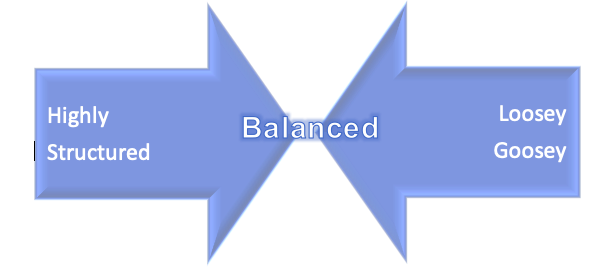
On one end, we have highly structured eating.
This might look like following a very specific diet, having lots of food rules, or feeling like you need to eat “perfectly” to stay on track.
On the other end is very little structure… “loosey goosey” as we like to say.
There may be few routines or plans around food. Meals might be decided at the last minute, skipped when you’re busy, or based mostly on whatever sounds good or is easiest in the moment.
Neither extreme is necessarily the goal.
For most people, balance lies somewhere in between.
What does balanced eating look like?
Balanced eating means having enough structure to support you, while leaving enough flexibility for real life.
That might mean:
- Planning some meals ahead but not needing to plan every bite
- Keeping enjoyable, nourishing foods available and convenient
- Eating regularly so you aren’t constantly getting overly hungry
- Having some go-to meals and snacks
- Enjoying restaurant meals, dessert, vacations, and spontaneous plans
- Being able to adjust your plan when life doesn’t go as expected
The amount of structure you need may look different from someone else’s.
For example, someone with celiac disease will need very specific food boundaries and that’s okay. Someone who routinely skips lunch because they’re busy may need to incorporate more structure.
Balance isn’t about everyone eating the same way. It’s about finding the amount of structure that helps you feel supported without making food feel like a set of rules you have to follow perfectly.
When the pendulum swings
Do you ever find yourself bouncing between the extremes?
You might start Monday with a strict set of rules:
“No sugar. No eating out. I’m going to be really good this week.”
For a while, you feel in control.
Then real life happens. You eat something that wasn’t part of the plan. Maybe you decide you’ve “blown it,” and the rules go out the window.
Suddenly, you’re on the other side of the spectrum. Not caring at all.
Then the guilt kicks in, and you decide it’s time to get back on track.
And the cycle starts again.
The answer isn’t necessarily to find an even stricter plan. Often, it’s to step off the pendulum altogether.
Finding your Well Balanced place
Ask yourself:
Do I have enough structure around food to support the way I want to eat?
Then consider:
- Could I benefit from a little more planning?
- Do I have enough flexibility when plans change?
- Are my food rules helping me, or making eating feel stressful?
- What happens when I eat something that wasn’t part of the plan?
- Am I relying on willpower when a little preparation could make things easier?
You may discover that you need more structure.
Or you may discover that you need more flexibility.
For many people, the answer is a little of both.
The goal isn’t perfect balance.
Some weeks will be more structured. Some will be more spontaneous. Some seasons of life may require more planning than others.
Well Balanced eating isn’t about staying perfectly in the middle of the spectrum. It’s about having enough structure to support you, enough flexibility to enjoy your life, and the ability to move back toward balance when things get off track.
That’s a much more sustainable place to be.
Food for thought
This week, instead of asking yourself “Am I being good?”, try asking:
“Would a little more structure or a little more flexibility help me right now?”
Sometimes one small adjustment is all it takes to move toward a more balanced approach to food.
Do you want to find more balance in your diet and lifestyle? Let’s chat!