by Lucy | Dec 14, 2016 | Well Balanced Wisdom
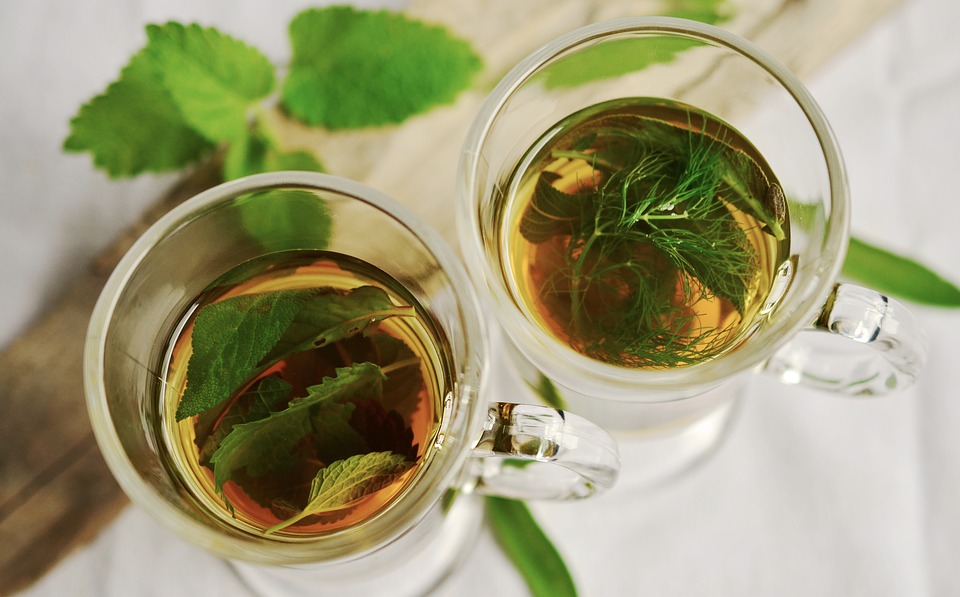
It’s 2pm and you’re starting to feel exhausted. Your brain is a little slow and you are day dreaming about a nap. There’s a good chance that you are on a sugar crash from all those holiday treats or maybe it’s just been a really long day. You could reach for another sugary pick me up from the break room OR you could try some peppermint tea instead! A study found peppermint tea improves brain function and alertness – a boost we could all use when the afternoon slump has us feeling foggy.
This study took 180 participants and randomly allocated them to receive a drink of peppermint tea, chamomile tea or hot water. Analysis of the results showed that peppermint tea helped improve long-term memory, working memory and alertness compared to both chamomile and hot water. Chamomile tea significantly slowed memory and attention speed compared to both peppermint and hot water.”
From this study, we also see that chamomile tea lives up to its reputation of being a sleepy time tea. Have a mug of it before bed to slow down and relax.
Cheers!
by Lucy | Dec 7, 2016 | Well Balanced Wisdom
Cough, hack, sneeze! I don’t know about you, but I’ve been hearing this everywhere! From work to daycare to friends and family… everyone is coming down with something. It has me thinking about these 3 things we all could be doing to stay well this winter.
Get your Vitamin D level checked. Our vitamin D levels are lowest in the winter months which means we may be missing out on some helpful immune benefits. One research study reported that adults who have low vitamin D levels are more likely to have had a recent cough, cold or upper respiratory infection. There is still a lot of research to be done about vitamin D but we do know that the active form of vitamin D can tame inflammation and boost production of microbe-fighting proteins in your body.
Dietary sources of vitamin D include salmon, tuna, fortified milk or juice, liver, cheese and egg yolks. It is not likely that you will be able to meet your needs through diet alone and the level of vitamin D supplementation you need will depend on your blood level. So talk to your doctor today if you think your vitamin D levels are low. In the meantime, it wouldn’t hurt to be taking a multivitamin that includes some vitamin D.
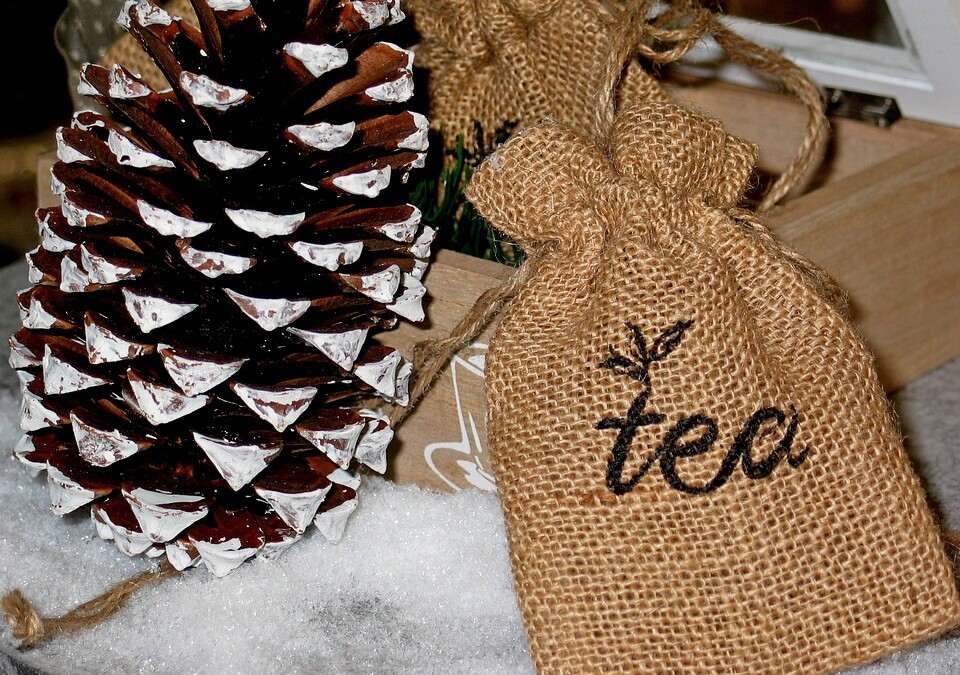
Stay hydrated. If you are anything like me, a glass of cold water doesn’t sound great this time of year. That’s trouble considering we still need to stay hydrated in the winter months. The good news is we can choose other ways to fill our bodies with the fluids we need. My favorite options? Tea and soup! Now doesn’t Candy Cane Green Tea sound delightful? Or what about unwinding with a little a cup of honey lavender stress relief tea?? And I can’t tell you how excited I am about this new local product for making soups. Thank you, Kate Elia, for transforming high quality, under-appreciated local scraps into a heavenly tasting kitchen staple that I can’t wait to get my hands on for winter cooking.
Move more. The shorter, colder and sometimes gloomy days of winter can encourage us to stay inside at our desk, on the couch or snuggled in bed longer. It can be hard to be as active as we are in the warmer seasons. It’s worth the effort though. Exercise makes you feel healthier and more energetic, it can ward off depression and it keeps our waist line slim. I love to find creative ways to move more in the winter. After sitting for a bit, I will get up and shake my sillies out (can you tell I have a 3 year old?) or I might run to my car instead of walk. Sometimes I do push ups while letting the kids play in the bath tub or do squats while I brush my teeth. These may seem small and insignificant but every lit bit of movement adds up. Of course, it’s also great to do more stretching, walking or a weight-lifting, too.
Food for thought:
What are you doing to stay well this winter?
Tell us:
What is your favorite winter wellness tip?
Looking for an immunity boost in your diet and lifestyle? We can help!
by Lucy | Nov 30, 2016 | Well Balanced Wisdom
The other day I was listening to a play back of a message I left for someone. It is so strange to hear your own voice, right? The first thing I noticed was that I took really long pauses in between my words. Maybe it is something that only I notice or maybe it is something other people pick up on too. Either way, I am a bit self conscience about it but here is why it happens.
I have grown incredibly aware of how important our words can be. Words, the things that fly out of our mouths, sometimes all willy-nilly like, can leave a lasting impact. You might remember a specific moment when someone’s words made a lasting impression on you – for better or for worse. Maybe it was a motivational speaker or something that was said during an argument. Those are big moments.
Even in the small, everyday mundane moments, our words matter. We can really be in the habit of saying the same words over and over without realizing it. A simple example is how many times we go around saying something like… “How are you?” “Fine, and you?” “Have a good day!”
Now dig a little deeper and think about all the other things we just automatically say. As a parent, I say “See?! Now that’s what you get for doing XYZ.” Or, “That’s why we don’t stand up in the chair.” Ugh… it just comes out like word vomit. I cringe when I hear myself saying that because no one needs to be reminded of a mistake they made in the midst of the pain. Chances are they’ve learned the lesson and they just need a little empathy and understanding.
We can say similar things to ourselves, often without noticing. I ask my clients to weigh themselves daily if they are trying to lose weight, but I tell them to be careful of their words and thoughts as they are doing it.
“I’m so fat.” “I can’t believe I ate all that.” “I’ll never lose this weight.”
These are the kinds of words and thoughts that can really sabotage our best efforts. When we see or hear negative words our bodies send out stress signals. Even worse, when we do it over and over again we can really start to believe those words. The more we hear, read, or speak a word or phrase, the more power it has over us. This is because the brain is always searching for patterns and repetitions in order to make sense of the world around us.
Instead of letting words get the best of us, we can use the power of words our advantage. We first have to gain awareness and then control over that which we are exposing ourselves to daily. Our natural tendency is to focus on the negative, and it takes work to turn that around. So when I speak slowly, it’s because I am consciously making an effort to catch and cancel out those negative words. It’s definitely a work in progress.
Food for thought:
What words do you speak, read or think repeatedly?
Try this today:
Go on a negativity diet.
- First, notice and be aware of your negative words and thoughts.
- When they pop up, you can say, “cancel, cancel, cancel!”
- Replace negative words with positive ones. Try saying challenge instead of problem or yes, later instead of no, not right now.
- Replace judgments and criticisms with words of kindness. We are all doing the best we can so be kind to yourself and others. Or if you must give negative feedback try sandwiching it between two positive statements/thoughts.
Boost the Power of Positivity. The next key is feeding your brain more good thoughts than bad.
- For every one negative thought you have, generate 3 to 5 positive thoughts. Your positive thoughts don’t have to be perfect, sound good or even make sense.
Feed your brain a hefty portion of positive words at least 3 times a day.
- Start your day by reading or saying positive affirmations, quotes or scripture.
- End your emails with a happy message.
- Drink from a cup with an uplifting message on it.
- Plaster sticky notes with positivity on your mirror, computer, phone, etc.
Tell us..
What ideas or thoughts do you have on the power of words?

by Lucy | Nov 23, 2016 | Well Balanced Wisdom
Daring to set boundaries is about having the courage to love ourselves, even when we risk disappointing others. – Brene Brown
I’ve learned a lot about boundaries in the past 3 1/2 years. When my daughter was born I discovered just how much your heart can love a tiny human. Naturally, I want to give her the world and I want her to be happy. Now more than ever, she has been testing her limits and pushing her boundaries as three-year-olds do. In those trying moments, I want to give in to her desires just to make her happy. Yet, I know avoiding temporary disappointments will only lead to long-term consequences.
If I let my little girl do whatever she wanted, she’d miss out on opportunities to develop life skills like learning how to share, be a friend, follow directions, and get along with others. On the other hand, if I’m too strict with her, she might not learn to think on her own, her confidence could suffer and she might grow to resent me. The sweet spot is right in the middle where loving boundaries exist.
A boundary is simply a line drawn between what is okay and not okay. While I’m in the thick of establishing these loving boundaries as a parent, I realize how important this concept is for our health and wellness goals as well. We have to determine for ourselves what is okay and not okay to preserve our health in the long-run.
For example, one of my clients has recently entered a new relationship. She realized upfront that she could easily get swept up in other things if she didn’t define what was important to her now. She knew that getting a good workout in at least 3 times a week kept her mentally and physically feeling her best. So now that she has this boundary set in her mind, it becomes easier to choose the gym even when other opportunities arise. She’s choosing to focus on the greater, long-term results of loving herself, instead of focusing on what would make everyone happy in the moment.
The holiday season is a time when we could all really stand to set loving boundaries. It is so easy to worry about disappointing others that we often forget to care for ourselves. Setting boundaries can be the most loving thing we do for ourselves this time of year. Your boundaries can help guide your decisions and make it easier to stay true to yourself through the hustle and bustle.
Food for thought:
Boundaries are a function of self-love and self-respect. – Brene Brown
What boundaries will you set for yourself?
by Lucy | Nov 16, 2016 | Well Balanced Wisdom
Awh..the season for feasting is here. There is a good chance you will be eating some turkey, gravy, rolls, stuffing and all the things to go along with it soon. YUM!! Who is excited for the yummy food?! (Me!) I could go on about how to be mindful, eat a well-balanced turkey dinner, avoid overeating but let’s face it…. Thanksgiving is about celebrating our food! Dare I say it but… I think it’s okay to overindulge a bit at your Thanksgiving meal.
Perhaps the most important thing is what you do afterward. Here’s what I plan to do after the feasting is done.
- Get outside and move! One year I did a turkey trot walk/run the morning of Thanksgiving. Another year my family walked around Duke’s campus after eating our meal. This year I’m gonna #OptOutside! Will you join me? Let’s say no to the long lines and madness of shopping and say yes to nature!! We’ll be posting pictures of us opting outside on our Facebook page. We wanna see your nature selfies too! Post them with the hashtag #OptOuside and #wellbalancednutrition
- Go green! Leftovers are awesome. We will likely have plenty of turkey, mashed potatoes, rolls and pie left after it’s all said and done! It’s really easy to over-do it if we don’t balance them out with some fruits and veggies. I am planning to buy a variety of greens and fruit to eat alongside the remaining foods from the turkey day spread.
- Eat breakfast. When you overeat a bit on Thanksgiving, skipping breakfast that morning or the next day may seem like a reasonable thing to do but it’s not wise. I will keep my metabolism going with a small and healthy morning meal such as eggs and fruit.
There you have it, folks! Those are my plans. What will you do? Comment below and let us know or let us know on Facebook.
Have a wonderful Thanksgiving Ya’ll!!

by Lucy | Nov 11, 2016 | Well Balanced Wisdom
Have you heard of the cave man diet? How about the Twinkie diet? Then there is the Whole30, Alkaline diet, the Zone diet, South Beach diet and so on. We hear new and often conflicting information on food and nutrition several times a day.
There is a new diet or a research finding on Dr. Oz, O Magazine, or on your Facebook feed all the time. It’s exhausting. Overwhelming. Sometimes annoying and downright confusing.
With so much out there, what is a gal or guy to do when they just want to eat healthy? Have more energy? Make a change?
It’s important to find a Registered Dietitian you can trust. An expert in the field that understands what it takes to change habits. I polled my fellow RDs to bring you THE THREE THINGS DIETITIANS WISH YOU KNEW…
- Want to make a healthy change? You cannot do it overnight. Consistency, tracking, and accountability are the keys to healthy change. BOTTOM LINE: If a program or pill promises instant results, sounds too good to be true or makes it seem way too easy… it probably won’t work in the long run. You have to be willing to put in the work and have patience. The good news though, is you don’t have to do it alone. You got this and we are here to help.
- We aren’t judging your food choices. If you sit down at the lunch table with one of us, you shouldn’t worry, we really don’t want to be the food police and we don’t want you judging what we eat either! Dietitians eat sweets and junk foods sometimes, too! BOTTOM LINE: No food shaming here! We try really hard not to label foods as good or bad. We actually encourage enjoying sweets, beer/wine or other indulgent foods that are worth it to you on occasion.
- There isn’t a ONE-SIZE-FITS-ALL approach to healthy eating. Each of our bodies is unique and the foods that will make us feel our best will be different. We love to help people figure out the right eating pattern that fits their individual needs and preferences. BOTTOM LINE: Just because your friend had success on a diet, doesn’t mean you will. We encourage you to do what is right for you. We can help you find what that is.
Food for thought:
Do you agree with these 3 things?
What is the most absurd diet advice you’ve heard?
So what’s the right choice for you? I know, I know. Maybe you’re thinking, “if I knew that I wouldn’t be talking to you!” That’s why we call it a journey.
Start your wellness journey with us today.