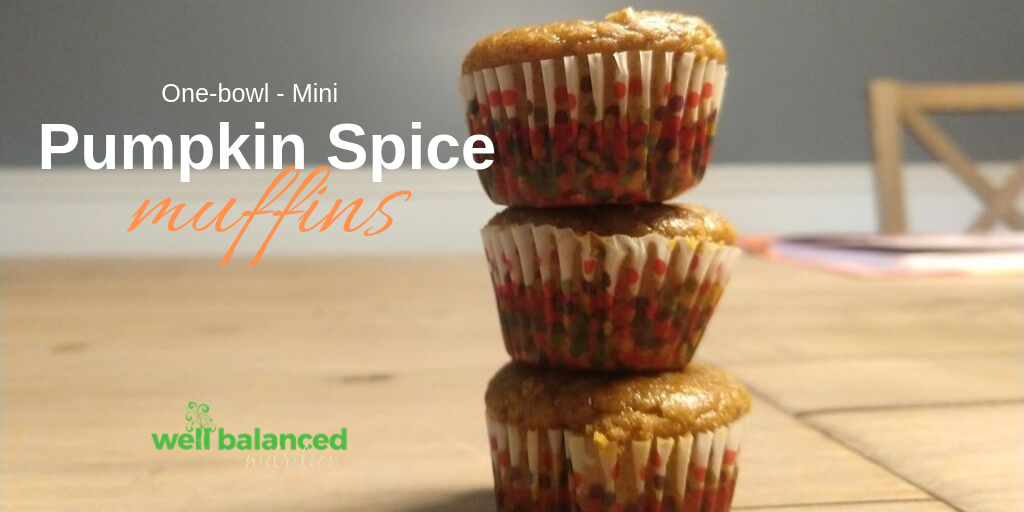
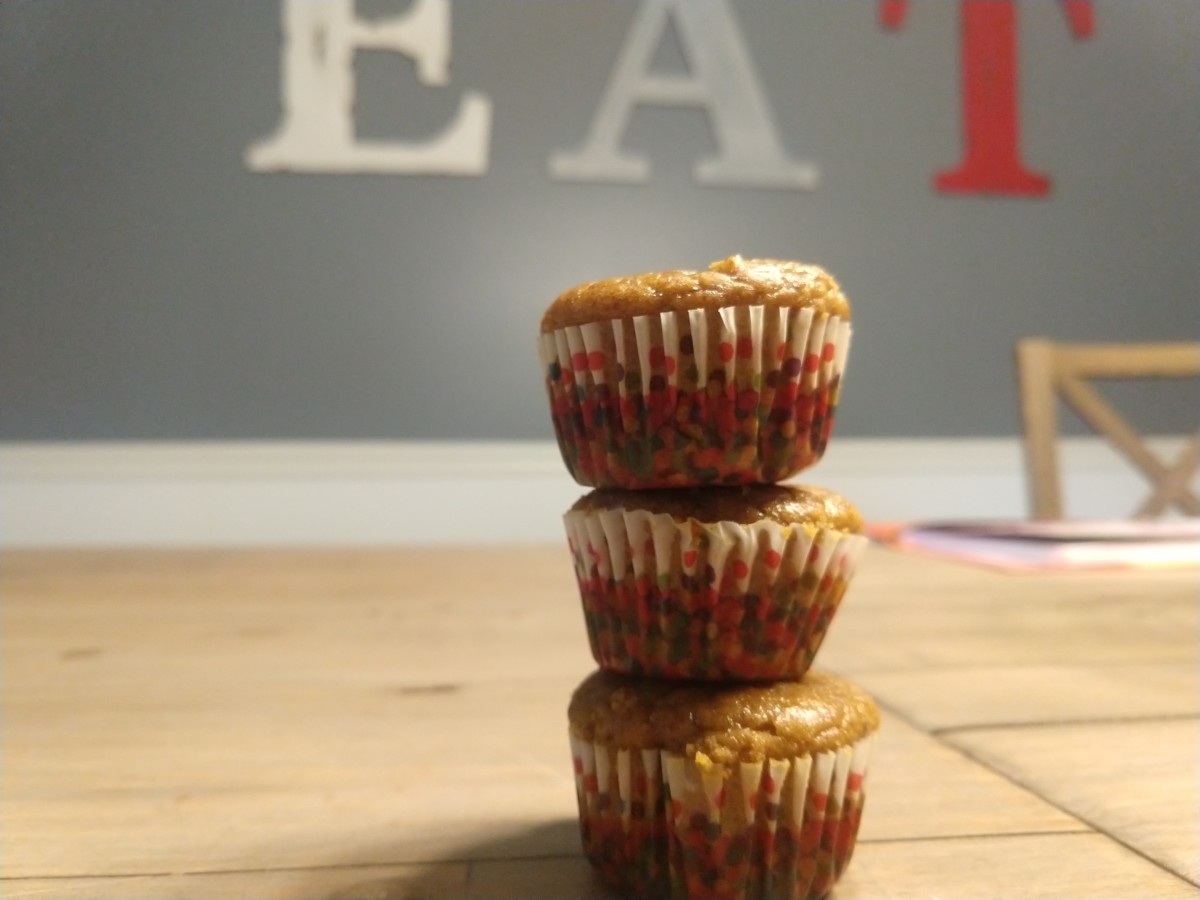
What better way to spend the first day of October than enjoying these warm and cozy Pumpkin Spice Muffins?! They taste like Fall and there are so many reasons why you will love them! Let me count the ways…
One-Bowl Wonder
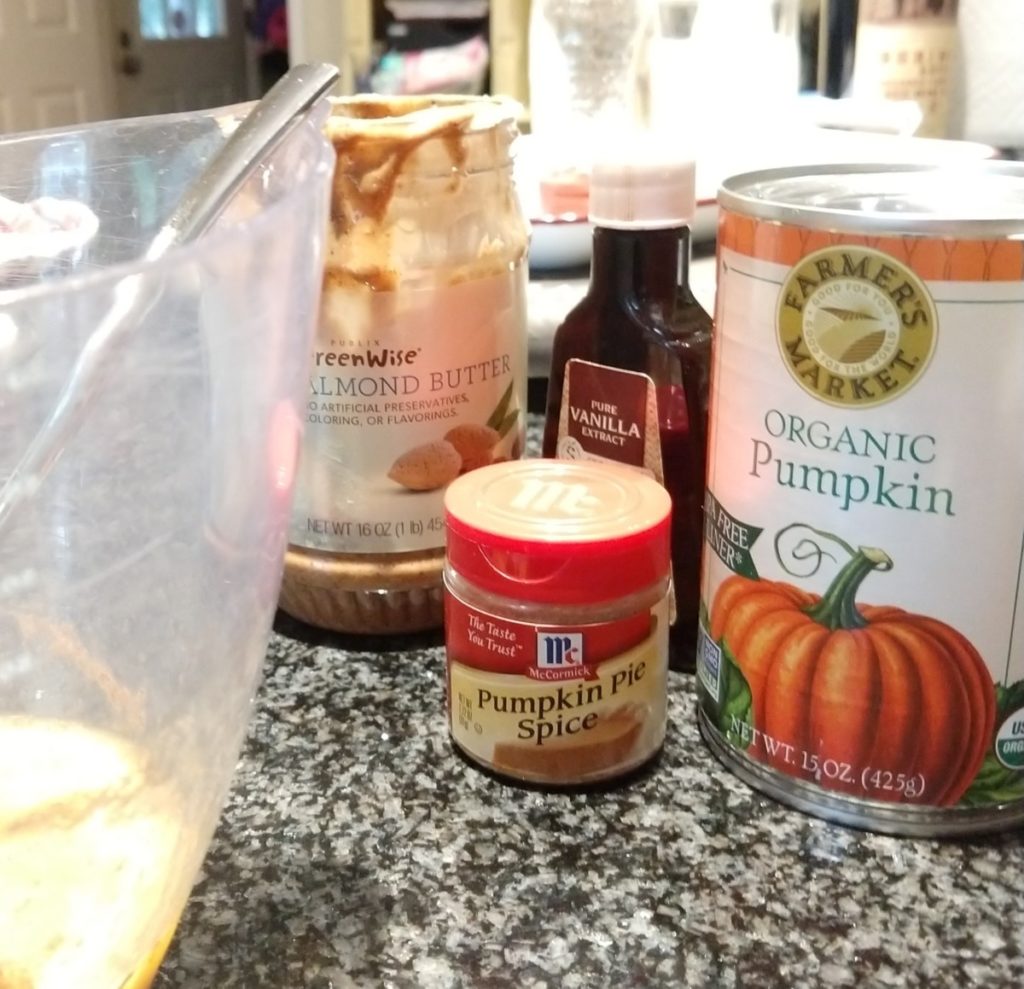
I love playing in the kitchen, but I don’t love the cleanup. I’ve had plenty of clients tell me the same thing. It can definitely be a drawback to getting in the kitchen at times. Choosing recipes that need minimal equipment is key. This recipe only requires one big bowl (actually, I like to use a large measuring cup instead of a bowl) and a couple measuring spoons. Clean up is a cinch, especially if you use cupcake liners.
Full of Fall Goodness
Pumpkin pie spice is all the rage this time year and it’s no wonder. The mixture of cinnamon, ginger, nutmeg, allspice, and cloves can bring about all the good feels of Fall. The pumpkin puree also makes these a delicious seasonal treat and it delivers a dose of nutritious goodness including fiber, vitamin K, vitamin C, potassium, copper, manganese, and riboflavin.
Balanced Nutrients
The nut butter and eggs in these muffins provide protein and fat while the pumpkin provides complex carbs. A mix of all the macronutrients makes for a well-balanced snack or treat. You can feel good about noshing on these with your morning coffee, with your lunch or in the afternoon.
Without further ado… I hope you enjoy this Autumn treat!
Well Balanced Nutrition
One-Bowl Mini Pumpkin Nut Butter Muffins
What better way to spend the first day of October than enjoying these warm and cozy Pumpkin Spice Muffins?! They taste like Fall and there are so many reasons why you will love them!
Add all ingredients, except coconut oil spray, to a bowl and whisk until smooth and creamy.
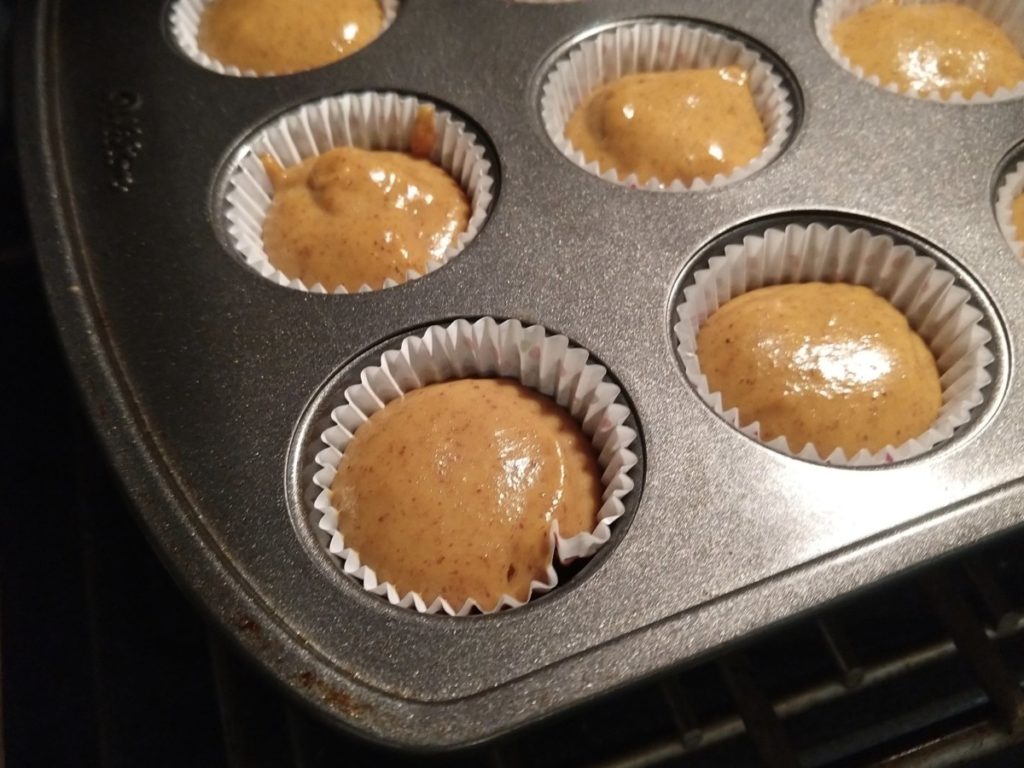
Using a small ice cream scoop or two spoons, place batter in mini muffin tins 3/4 way full.
Bake for about 10 minutes until tops spring back when touched. (If using larger muffin tins, bake time will be longer.)
Remove from oven and let stand two minutes before removing from pan.
Notes
I use almond butter because it’s my preference.Try a natural nut butter if you can, with just nuts (and maybe a pinch of salt). Don’t worry if the oil separates; that’s normal! Give it a good stir before using in this recipe.If peanut or nut allergies are in the house, a seed butter like Sunbutter works just as well.
Can you boost your health with coffee? Is it a guilty pleasure or a natural superfood? We thought we would shed some light on the science behind coffee.
If you are like me, coffee strikes an emotional cord – you love starting your day with a warm comforting cup of coffee. Is this a guilty pleasure or can your morning coffee be a part of a healthy, balanced diet? Good news! Coffee is a natural superfood. Today we are breaking down 5 ways coffee can boost your health. Plus, what to consider when making coffee part of your healthy lifestyle and fun ways to enjoy it.
Five ways coffee can boost your health:
Provides Antioxidants
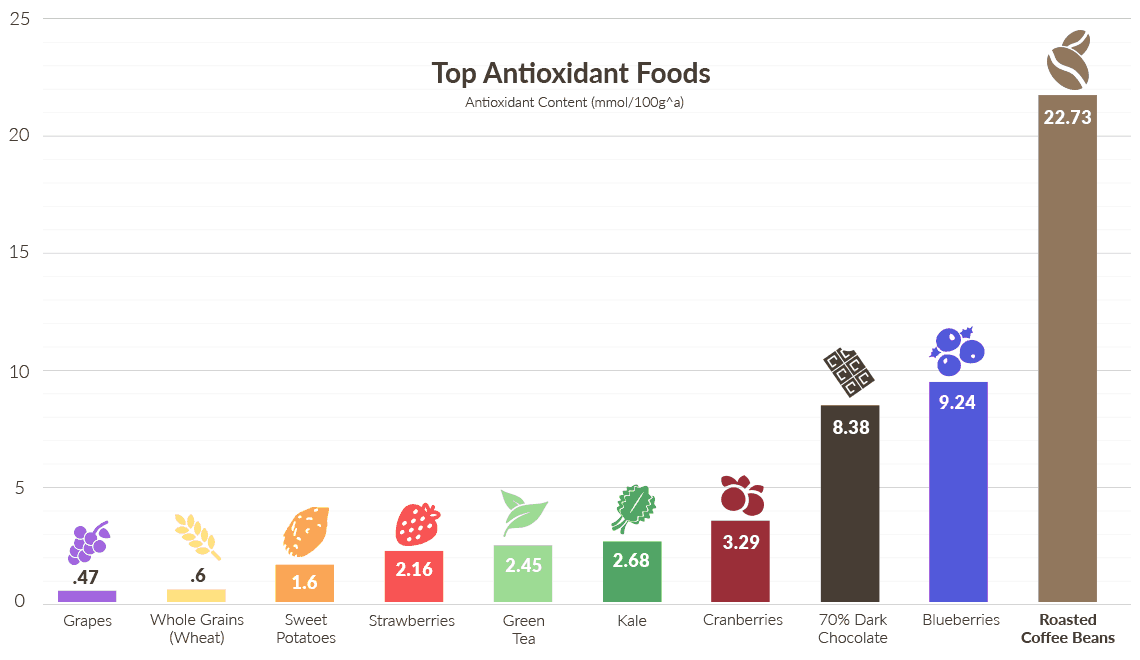
Coffee beans are rich in antioxidants. These components protect you from damaging free radicals that can cause harm in the body. As you can see in the chart below, coffee delivers more antioxidants than certain fruits and vegetables!
Improves Athletic Performance
Athleteswho take in caffeine pre-exercise burned 15% more calories for three hours post-exercise than those who don’t. A little caffeine post-workout may have benefits too. Compared to consuming carbohydrates alone, a caffeine/carb combo was shown to increase muscle glycogen by 66% after intense exercise, allowing athletes to exercise harder and longer next time.
Diabetes Prevention
This 2014 study showed that participants who increased their coffee consumption by more than 1 cup per day over a 4 year period had an 11% lower risk of type 2 diabetes in the subsequent 4 years compared with those who made no changes in their coffee consumption. Participants who decreased their coffee intake by more than 1 cup per day had a 17% higher risk for type 2 diabetes.
Lowers Risk for Liver Disease
This meta-analysissuggests a 40% reduced risk of liver cancer in coffee drinkers. Research also suggests that coffee consumption is associated with a lower risk of other liver conditions as well.
Cancer Prevention
Coffee is valued for its high antioxidant value and phytochemicals, so it is no surprise that coffee has been linked to lower risk for certain types of cancers and may promote longevity. According to the American Institute for Cancer Research, “coffee drinkers may live longer than non-coffee drinkers, having lower risk of dying from many cancers – as well as other chronic diseases.” You can read more about the research on the AICR websitehere.
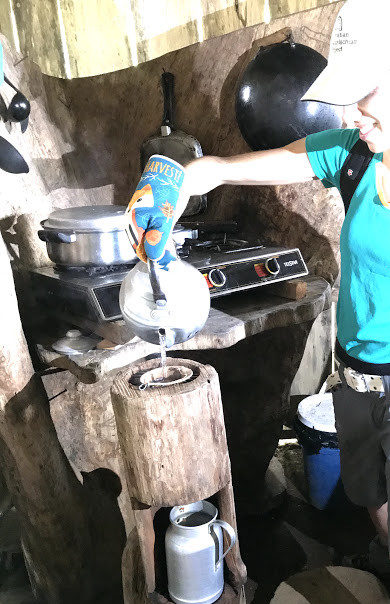
Lucy pouring water into a primitive drip coffee maker during our Costa Rica Wellness Adventure.
Most are pleased to hear that there is evidence that supports the theory that coffee is a health food. And, all of these benefits are great. However, there are some things to keep in mind when enjoying your coffee. When thinking about how coffee fits into your lifestyle, ask yourself the following questions:
So my indulgent latte is good for me? Well…
If we are being honest, it’s really easy to outweigh the benefits of coffee when you start adding a lot of creamer, sweeteners, and syrups. Added sugars and artificial sweeteners have negative health consequences. There are healthier ways to enjoy a cup of coffee. Try frothing your own milk at home or slowly weaning yourself away from the syrups and creamers.
Is regular or decaf coffee best? It’s Personal.
Some individuals may benefit more than others from the effects of different food and beverages. This holds true for caffeinated coffee. Genetic variations can affect how fast you metabolize caffeine. Those who are fast metabolizers may get the most benefit from drinking regular coffee and those who have impaired caffeine metabolism actually may have some risk associated with drinking caffeinated coffee. Similarly, certain genetic variations have been linked to caffeine consumption causing anxiety. If caffeine doesn’t sit well with you or gives you an edgy feeling, you may want to stick with decaf or give up coffee for a week to see if makes a difference for you.
Does quality matter? Absolutely.
When it comes down to it, quality really does matter. We love a good bargain, but if you go for the cheapest coffee grounds at the store or get your coffee from the gas station, those coffee beans may contain a higher ratio of bean defects (such as insect damage, over-fermentation, and oxidized beans) and higher levels of mold. Plus, the coffee could be stale and acidic. Many of the benefits of the coffee compounds will still be present, but so will toxins and chemicals that can create adverse health effects.
Ways to enjoy your coffee:
When we add artificial sweeteners, corn syrup, sugar on sugar, syrups, more sugar– they start to outweigh the benefits of coffee. If you want some sweetness to your coffee try adding a little stevia, monkfruit, or erythritol. Get creative and throw in some cinnamon or ginger. If you use creamer, make sure to check out the ingredient list. You may be surprised about what’s in it.
Think outside the coffee mug. Check out these fun ways to add it to your food.
Coffee isn’t just for drinking, try cooking with it! Use the grounds in anything from baked goods, smoothies, energy bites, or [combined with dried herbs] as a coating for steak or fish. Here is just one of the delicious coffee recipes from our meal plans for you to try – another favorite to search for in our database is the Salted Caramel Latte Smoothie 😋. {Sign up for a free trial of any plan to explore all coffee recipes}:
Drink it hot or pour yourself a nice glass of cold brew…
Because coffee acids are better extracted at high temperatures, cold brew can be up to 60% less acidic than hot brewed coffee. Great news if you worry about acid reflux. Plus, many people love the smoother, sweeter flavor of cold brew. Since fewer acids are extracted than from a typical heated brewing process, it doesn’t have the same bitter bite to it that can be off-putting for some. Here is a guide to brewing the perfect cup of coffee.
Now you can sit back, relax, sip, and experience the health benefits that coffee has to offer. Have any questions you want to ask us? Let’s grab a cup of coffee and chat – reachout today.
If you’ve been thinking lately “I could be healthier if only I wasn’t so lazy,” we’ve got just the guide for you. Below you will find a relatable story and the 3 steps to transform you from a lazy person to someone with momentum and healthier habits.
Recently, while talking with a busy small business owner, Kat Reher of Synergy Fitness for Her in Durham, Kat explained she would like to cook at home more consistently and states “but I’m just too lazy.”
To put things in perspective, this fun-loving, independent, and strong woman is not only running a fabulous fitness gym for women, but also is regularly adopting young kittens and helping find good homes for (or keeping) her furry friends. She may be up as early as 5 AM to help open the gym or cover a group fitness class then go to bed at 11 PM after wrapping up emails or other work tasks.
The point is, she is anything but lazy! We suspect the same is true for you.
Unless you’re living a life where you can lay on the sofa all day, not working, not making food for yourself or your family, and not cleaning up around the house you are probably quite busy and productive.
3 Steps To Overcome Lazy Vibes and Build Momentum
Stop calling yourself lazy.
It’s not helping you. As explained by Dr. Rick Hanson the author of Resilient, we all have an inner critic and an inner nurturer (or helper). Your inner critic is often louder than the nurturing voice. This critic is kind of mean and may sometimes call you fat, ugly, or lazy. It would be nice if we could just turn that voice off, but often the critic is stubborn and insists that if she was not there you’d be even worse. The key is to turn the volume down on this critical inner dialogue. Some find it helpful to say “cancel, cancel, cancel,” when the voice creeps in. Others, have a saying or mantra that turns the internal conversation around.
Find out why you’re *really* not doing what you say you want to do.
For instance, with our example above, Kat wants to prepare her own meals at home; however, she hates grocery shopping. The crowds and the abundance of choices are overwhelming and causes her to retreat to old habits like mac and cheese and chocolate ice cream. What is the biggest speed-bump or hurdle standing in the way of you making this change?
Identify how you prioritize.
If cooking dinner at home is important to you; however, you keep winding up in the fast food lane on the way home, convenience is driving your decision. Perhaps you haven’t yet mastered making quick and easy dinners at home and you don’t know where to start. It may also mean you are letting other things become a higher priority without stopping to think about it. We tend to do what we must do first, such as going to work, paying bills, feeding the kids, etc. The calendar then gets filled up with several other things squeezed in between. This often zaps our bandwidth or energy leaving us too drained to do the healthy habits we know are good for us.
Is it time to make a shift in your priorities or schedule? Are the things on your calendar truly what you want to prioritze? Are there new habits you could put on the calendar by first taking something off or breaking it down into baby steps?
Sometimes, we are in a season that doesn’t allow for all the healthy habits that we want to have. If that is the case for you right now, become OK with good enough. Before your inner critic chimes in to say good enough is not enough, what if you were to cook dinner at least two times a week instead of once a month? Wouldn’t that be better? Focus on progress, not perfection.
How to stop being lazy and gain some momentum toward healthy habits
To sumarize, first, stop calling yourself lazy! Every time you catch yourself saying that, make an intentional shift to listen to your nurturing voice instead. Thinking of what you would say to your best friend if she came to you with the same issue that you’re having. What would you say to her?
Then, get to the bottom of what is really preventing you from the habit you want to create and brainstorm how to overcome that barrier. Lastly, take a look at what you prioritize in your life. Is it time to take ownership and control of how you spend your days? What if even a small shift in your priorities could make a big impact in your health?
Detox is a popular word these days. It often comes along with the promise of weight loss, mental clarity, a clean system and increased energy. Is it legit or is it too good to be true? In this article, you’ll learn the basics of detox, how to support your body’s detox systems naturally, and what a detox plan should and shouldn’t include.
What exactly is detox?
Detoxification, or detox for short, refers to the way we eliminate or neutralize toxins through the colon, liver, kidneys, lungs, lymph glands and skin. It is a very important and normal process in our body that is there for us 24/7.
What are toxins?
Simply put toxins are substances that are poisonous to our bodies. They can come from the environment, the food we eat, and what we put on our skin. They can also be produced inside of our bodies. Tobacco smoke, alcohol, pesticides, BPA, and mercury are just a few common toxins we may be exposed to regularly.
It’s In Our Genes
Everyone’s body is unique in how efficiently it clears toxins and this depends on our genes. Most of us can get rid of toxins effectively and efficiently, while others may have less efficient systems.
What can I do to help my body get rid of toxins?
It is wise to support your body’s detox system by limiting your exposure to toxins and making food and lifestyle choices that support the body’s detox efforts.
Natural Ways to Support Your Detox System
Luckily, we don’t need to do anything really drastic like a colon cleanse or a juice detox to feel good and support our detox pathways. Our organs are most likely doing a great job eliminating anything our bodies deem dangerous. We CAN make their job a little easier though. Here are a few ways to do that.
Avoid potentially carcinogenic compounds to reduce chemical load.
We are exposed to 100,000 to 200,000 chemicals routinely so it is not realistic to think we can eliminate our exposure to ALL toxins. We can, however, make several small choices that will help such as using glass rather than plastic, buying food from farms that limit their pesticide use, and carefully choosing our seafood to avoid too much mercury.
Exercise and sweat. While sweating won’t eliminate all your toxins, a small number of water-soluble toxins can come out when you sweat. This is just another great reason to move our bodies!
Regular bowel movements can keep toxins moving along.
Getting adequate fiber intake through plant foods and drinking plenty of water are critical steps you can take to allow your body to eliminate toxins.
Eat legumes & fermented foods to support the gut microbiome, which plays a role in the detoxing process.
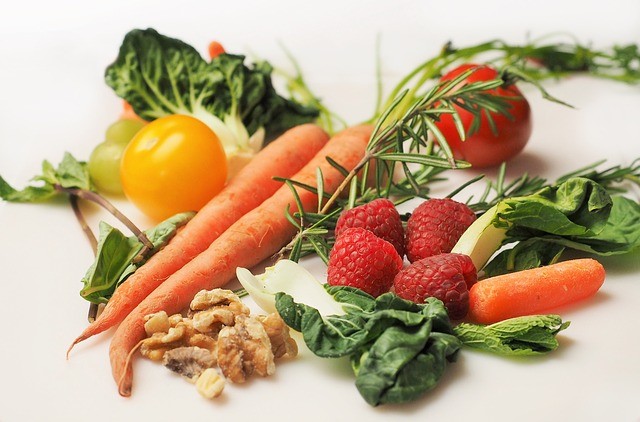
Eat fruits and vegetables 5 times a day. Consume a variety to benefit from a diverse amount of antioxidants. A few great choices for detox purposes:
Beets
Avocados
Broccoli, Kale, Cauliflower
Lemons and other citrus fruits
Berries
Is a Detox Diet Safe?
We understand the desire to start over with a clean slate and refocus your food choices at times. However, it doesn’t require a strict detox plan or starvation to start fresh and feel better. In fact, detox plans that call for fasting can be harmful to some people with medical conditions.
If your habits aren’t serving you well, it is always best to address the underlying problem with one of your friendly nutrition coaches or your doctor. Taking it one step at a time is often much more conducive to creating a healthy habit than eliminating several foods at once as a detox program might call for.
Be wary of the detox diet if..
It promises to flush out the toxins. This is worrisome because you may also be flushing out healthy gut bacteria that you need. Remember your body has a great system already in place for ridding itself of toxins and there are several natural, gentle ways to support it.
It promises weight loss. Yes, you will lose weight but the promise is not for sustainable weight loss and most of it will be water weight. There is a very slim chance that the weight will stay off once the detox is done unless you work on your habits after the detox.
It’s extreme. You always need to be careful with plans that include fasting or drinking only juice/water.
It seems like a quick fix. We know that there is no such thing. Trust us, we wish we could offer a quick fix, but it’s just not possible. If it sounds too good to be true, it probably is.
It uses laxatives. A laxative regimen can cause dehydration, deplete electrolytes, and interfere with normal bowel function.
It’s for the wrong reasons. If you think you need to punish your body, cleanse your body or undo bad habits, let us be the first to tell you that a strict detox is not the answer.
A Reasonable Detox Plan
A reasonable detox plan will include satisfying and nutritionally balanced meals, plenty of liquids, and a focus on nutrient-dense whole foods like fruits, vegetables, nuts, seeds, and beans. The goal might be to replace all processed foods with more natural foods and limiting or avoiding things like soda, chips, candy, etc. It may also encourage fasting for 8-14 hours overnight to allow your body to digest, rest, and work its wonders. These are all reasonable ways to support a healthy detox system and a healthy body.
Bottom Line
The body’s detox systems are designed to fight off most environmental insults and the effects of the occasional over-indulgence. If you’re generally healthy, we recommend directing your efforts toward giving your body what it needs to maintain its amazing self-cleaning system — a well-balanced diet, plenty of fluids, regular physical activity, and sufficient sleep.
Ready to build healthy habits that will last? We are here for you! Start now.
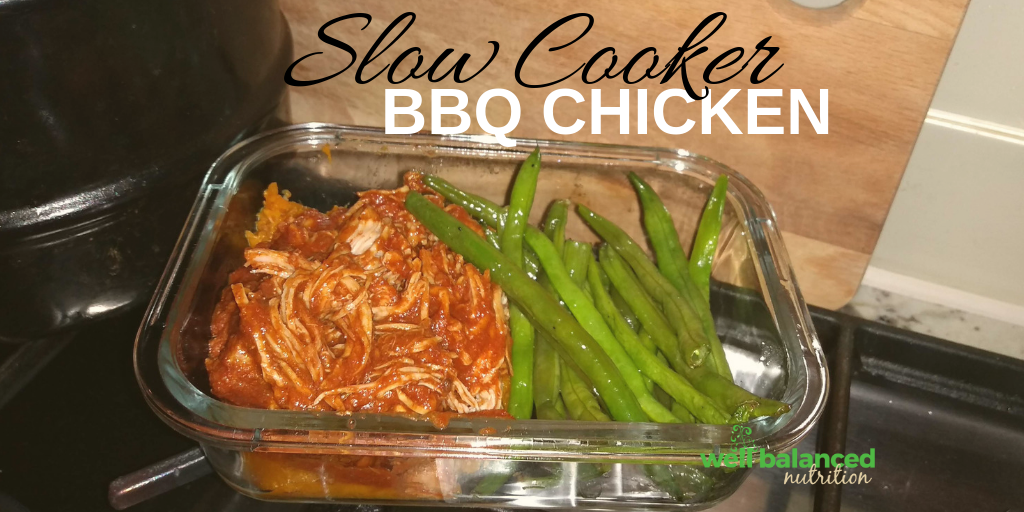
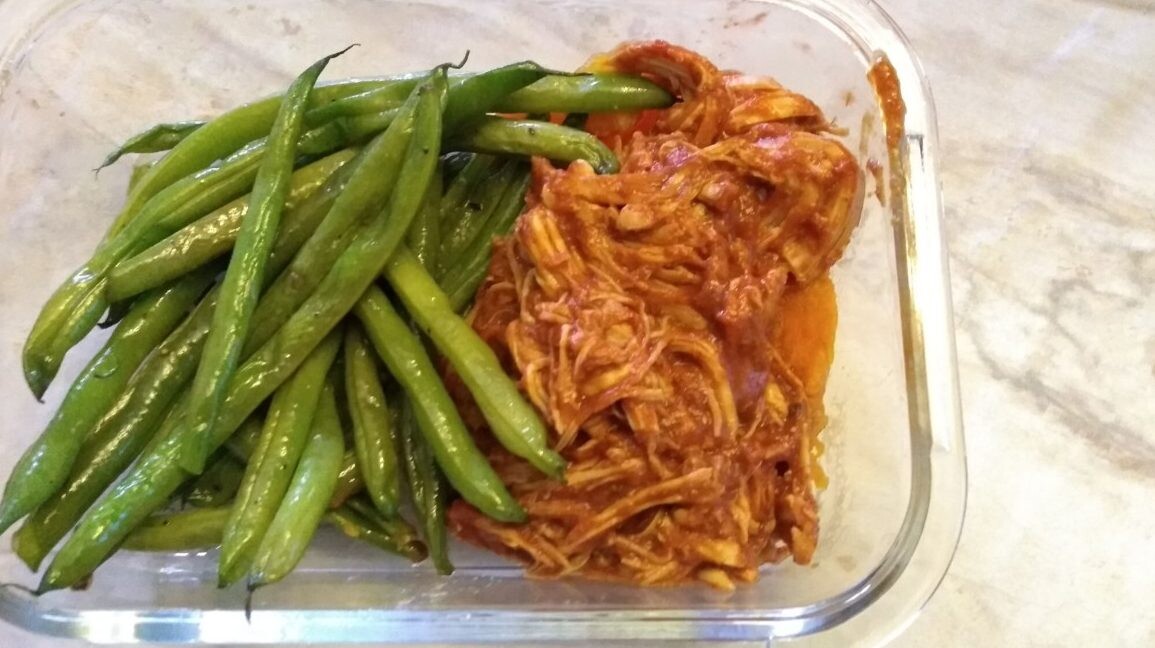
When the weather is warm and the days are long, the last thing you want to do is turn on the oven or cook on the hot stove. Even in the colder months, it’s nice to have a simple go-to meal that requires little work. Slow cooker BBQ chicken to the rescue! Whisk up this homemade barbecue sauce, pour on top of the chicken and let it cook as you get on with your day.
This slow cooker BBQ with a delicious home-made sauce is so clutch for a quick and easy meal option. Make it a freezer meal, include it in your meal prep, or make it while you are at work.
Why make your own BBQ sauce??
It is so easy to just pick up a bottle of BBQ sauce at the store. Why even bother making your own? Unlike store-bought BBQ sauces, our recipe is free of added sugar. Even recipes online will call for honey, sugar, or ketchup. There is nothing wrong with a little sweetness, but if you are mindful of your added sugar intake, you know that it can add up really quickly. We opted for nutrient-rich and flavor-boosting tomato paste instead of ketchup. Tomato paste provides a boost of vitamin C, the powerful antioxidant lycopene, and no added sugar. Don’t worry, the sugar may be absent, but the flavor is not! Smoked paprika makes a big difference in this sauce, so you won’t want to skip it.
Slow cooker BBQ chicken can be a freezer meal that’s ready to dump-and-cook or it can be part of your weekly meal prep routine.
Whisk up the sauce, pour it over chicken breasts in a freezer bag, and stash it away until you need it. Simply, defrost the day before you want to cook it. It is also a great meal prep option.
Make it a Well Balanced Meal
Barbecue chicken is very versatile. On its own, it is Paleo, Low Carb, and Whole30 friendly. You can enjoy it on a hearty whole grain bun or a sweet potato with a hefty helping of sauteed zucchini, green beans, or another vegetable you enjoy.
.
Kristen Norton
Slow Cooker BBQ Chicken
A delicious homemade BBQ sauce recipe with antioxidant rich tomato paste and free of added sugars.
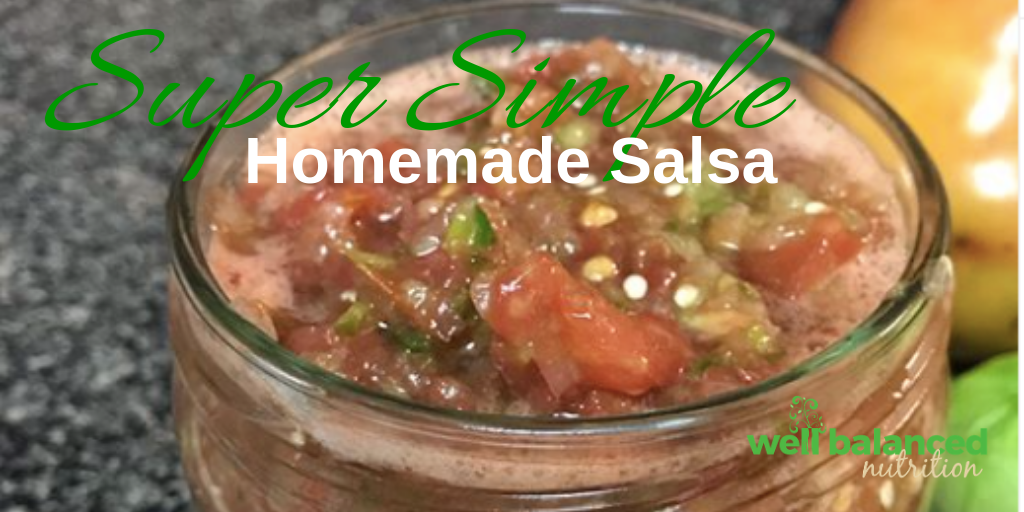
It’s that time of year again! The longer warm days mean more time to play outside and less desire to spend hours in the kitchen. That’s why we love this simple salsa recipe to round out a taco salad for an easy meal or simply enjoy a with whole grain corn (or lentil) chips as a snack!
It is a warm Spring day in Durham, NC (or your hometown) and your friends, coworkers or honey has invited you to hang out at [fill in the blank], your favorite hip place to sit outside and enjoy a microbrew, glass of wine or signature cocktail. There is no shortage of opportunities to enjoy a “cold one” when the weather gets nice. It seems like it is what you DO this time of year. You may enjoy one after working up a sweat in a boot camp class or sip some wine after a refreshing yoga session.
As a wellness enthusiast, you may have wondered, ” Can I drink alcohol and still be healthy?
If you are a client or follower of Well Balanced Nutrition, you know that we focus on holistic health and wellness that goes beyond simple nutrition. When we answer the question, is drinking alcohol healthy for me, we must look at it from all sides – or as many as possible. I wish that it was a simple answer – “yes, it’s nutritious” OR “no, steer clear.” It’s more complicated than that and it is very personal. Let’s dive into the research, look at things you should consider and how this can all be brought back to your personal wellness journey.
Research suggests moderate drinking is heart healthy.
In 2016 an international consensus statement came out stating that moderate amounts of drinking can benefit your heart by preventing the occurrence of disease and deaths caused by heart disease. That’s a pretty big deal considering heart disease is the leading cause of death for both men and women. Cheers to that, right!?
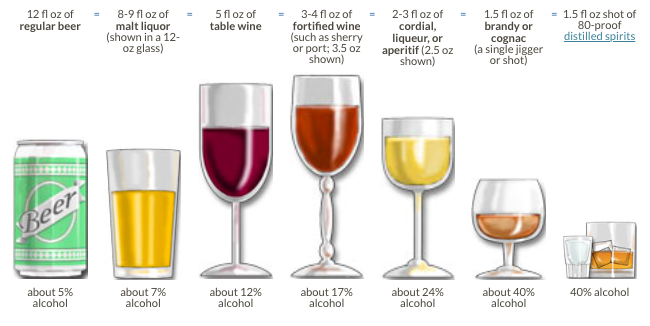
First, let’s stop and define what “moderate drinking” means. In order to potentially see this heart health benefit, a man must stop at 2 drinks per day and women must stop at one drink per day. Before you wine-lovers get too excited, this does not mean pour an entire bottle of wine into one wine glass. (Have you seen those hilarious memes!?)
But before we raise our glasses, a newer study says maybe we should drink even less to reduce our risk.
A newer study updated in 2018, suggests that a better guideline for current drinkers (both men and women) is to drink no more than 7 drinks per week. In their review of the evidence, researchers found the lowest risk of premature death was in those consuming this amount or less.
The heart health takeaway: One 12 ounce beer, 5 oz glass of wine or 1.5 oz shot per day can be protective against heart disease and keep us at low-risk.
While moderate alcohol consumption may benefit our hearts, other evidence suggests that, when it comes to cancer, there is no safe amount.
While heart disease is the number one killer, cancer is right there in second place. It appears that even light to moderate drinking can increase our risks of some cancers. This is true for esophageal, head and neck, and breast cancer.
Other important things to consider
There are many other things to consider when deciding if drinking alcohol can be part of a healthy diet and lifestyle. If you are a pregnant woman or planning to become pregnant, a recovering alcoholic, a person with liver disease, under the legal drinking age or taking one or more medications that interact with alcohol, drinking alcohol poses substantial risks and should be avoided.
The reason you choose to drink matters.
Have you ever thought, “I’m so stressed. I just need a beer (or glass of wine).” If this is a nightly ritual for you, perhaps it is time to think about other more nurturing ways to take care of yourself after a long day or stressful event. The trouble with continuously numbing your pain with a drink (or food) is that it leads to numbing all emotions – even the good ones that you don’t want to miss out on.
Alcohol and Weight Loss
For a few reasons, alcohol could be sabotaging your efforts to eat well and lose weight. First, when you drink, your liver will prioritize metabolizing the alcohol and this will put a halt to any fat loss and may even increase fat storage. Also, alcohol increases your appetite and lowers inhibitions making it hard to say no to those pretzels, late night pizza or sweets. Lastly, alcoholic beverages can be high in calories. If you’re serious about losing weight, it’s best to put alcohol aside – or at the very least cut back and choose wisely. Below are calorie counts for alcohol, which vary.
Beer — 250 calories
Red or white wine — 120 calories
Daiquiri — 259 calories
Vodka and club soda — 64 calories
Champagne — 84 calories
Rum and Coke — 91 calories
Cosmopolitan — 230 calories
Bloody Mary — 140 calories
Sangria — 167 calories
Plain Martini — 69 calories
Margarita — 270 calories
Alcohol and Sleep
Drinking alcohol can interfere with a good night’s sleep. While it may make you drowsy initially, drinking alcohol will make your sleep less restorative, more likely to be interrupted and lower in quality, according to the National Sleep Foundation.
Alcohol and IBS
If you have a sensitive digestive tract, you may already know that alcohol is a gut irritant. It often causes flare ups for people with Irritable Bowel Syndrome. Everybody is a little different. Some might find that they can tolerate a gin and tonic or glass of dry wine, while beer may really trigger symptoms. Not overdoing it and listening to your body will help keep your gut happier.
I get by with a little help from my friends
If you are going to drink, drinking an alcoholic beverage as part of a healthy meal that you enjoy with good company, may quite possibly be the best way to do it. The benefits of drinking alcohol for heart health may not be much alone, but when you pair it with quality social time and/or nourishing food this combination seems to be a key for living a long healthy and happy life. In the pockets around the world with the highest life expectancy, people drink moderately and regularly. As the researchers who study these communities put it…
“The trick is to drink 1-2 glasses per day (preferably Sardinian Cannonau wine), with friends and/or with food. And no, you can’t save up all week and have 14 drinks on Saturday.” – Dan Buettner, Power 9®
Bringing it back to you and your personal wellness journey.
Now that you know what the research says about your risk, who should avoid alcohol and the many other things to consider, let’s bring the focus back to your individual story. It comes back to figuring out what is right for you. What is your personal and family health history? What are your goals? How does alcohol make you feel? What role does it play in your life? Does it help you live your best life or does it get in the way?
Still curious about this topic? Check out these additional resources:
I’m usually pretty good at this, but recently, I fell apart.
It was crazy at my house for a few weeks in a row as we scrambled to get our house ready to be put on the market. The stress in my home was palpable, and the to-do lists were endless between work, home, and kids. Our comforting routine was all out of sorts, which left me floundering.
Luckily, all the hard work paid off, and the house was under contract before we knew it! That meant when we were away on vacation in Florida, we didn’t even need to worry about dealing with an open house or incoming offers. What a relief!
Bring on the relaxation.
Warm weather, family time, and a blank to-do list had me feeling like….awhhhhhhh. I think I relaxed a little too much because, toward the end of the vacation, I wasn’t feeling too stellar. My diet was a bit off track, my sleep was lacking (my kids always have a hard time sleeping in new places), and my physical activity level was embarrassing.
I knew I didn’t have to make it up, just make it back on track. On the way home from Florida, I reflected on the things I did well and the things that I could have done differently. This builds on the ideas Lucy shared in part one about being picky and sticking to what works well for you.
Fun foods are fun, but only if they don’t stop the fun for YOU.
I reminded myself of what we remind the tribe all the time. Your diet doesn’t need to be perfect. Annnnd there is a little more room (in my book) for fun foods while on vacation, because, well, it’s vacation! However, having so many fun foods that you feel terrible or wreck your goals doesn’t serve you. Tapping into your intuitive eating skills can come in handy here.
I’ll give you an example. I went out to eat one night in Florida and wanted to enjoy a cocktail. So I had one. Unfortunately, cocktails can include a lot of juice or flavored syrups that make me feel sick. The one I ordered was delicious and fruity – but definitely loaded with sugar. That night, when we returned to the house, I was offered another sugary adult beverage. It sounded fun at the time, but I declined. I knew it might be enjoyable for a bit, but the next day, I’d likely have a headache and an upset stomach. That’s no good when you are headed to the beach!
Your body will usually tell you when you are overdoing it.
Sometimes we don’t end up saying no to that second drink or the dessert. That’s okay. Nothing to beat yourself up about. It happens. If your body responds in uncomfortable ways like feeling bloated, having indigestion, or not being able to sleep well, for example, don’t ignore those symptoms. Take those into consideration next time. In the meantime, you can do this yoga routine to try to feel better.
I know a few people who push through those things and completely zone out from their bodies’ cues. Continously ignoring these signals can lead to health problems, weight gain, and a loss of well-being. Go ahead, tune in, take note, and know where to draw the line next time.
5 Creative Ways To Get Your Veggies In on Vacation
You know we love veggies at Well Balanced Nutrition, so it will likely come as no surprise when I encourage you to find a way to eat them while on vacation. Veggies provide fiber, water, antioxidants, vitamins, and minerals. Here are some things I did on this trip.
BYOV. We had some greens in the refrigerator that we took with us in a cooler so they wouldn’t go to waste while we were gone. When we stopped at Chick-fil-A, I carried in a small container of my arugula and ordered nuggets to go with it. Sorry, not sorry! It was the light and yummy meal I needed to get me through the car trip.
Once we were there, my husband picked up a veggie tray from the grocery store. It was a simple way to make sure we had veggies that were easy to incorporate. Raw veggies and dip can be a great snack or round-out lunch.
Make an egg casserole for breakfast. I love egg dishes because you can make them ahead and sneak veggies in at breakfast. We made this breakfast casserole and even my dad who doesn’t dig most veggies, enjoyed it.
Get an order of veggies on the side when you eat out. From my experience, even when the description on the menu lists an array of vegetables in a dish, the amount of vegetables present in the meal is very small. One night, I enjoyed a creamy pasta dish with broccoli at a table overlooking the water. I was right, it didn’t come with much broccoli at all. So I asked for a side of steamed broccoli that I tossed into my pasta to double up the portion.
If veggies are just really hard to find or get,focus on fiber-rich fruits like pears, kiwi, blackberries, raspberries, blueberries, and strawberries. Beans can be another good source of fiber.
What didn’t go so well:
After a whirlwind of two weeks, I was ready to rest. Taking it easy is great, but movement is also good for you. I went into sloth mode a little too hard. Sometimes, it’s difficult to find the right balance. In hindsight, I wish I had found a few more opportunities to walk.
If you have young kids, you know – going on vacation is not restful at night. Getting a good night’s sleep can feel impossible.
Make it back!
Vacations are awesome! If you come back from a vacation feeling worse than when you left, maybe it’s time to revisit some of your habits while away. Being an intuitive eater, splurging smartly, and fitting in those veggies may help you come back refreshed and balanced. Or maybe you did the best you can, and giving yourself grace is what you need. In the end, it’s a week or two – it is not an end-all-be-all kind of situation. Don’t beat yourself up. Live, learn, and make it back to habits that make you feel your best at the first opportunity you can.
It is an evidenced-based, mind-body philosophy comprised of 10 Principles and created by two dietitians, Evelyn Tribole and Elyse Resch in 1995. In Evelyn Tribole’s words, “Essentially, Intuitive Eating is a personal process of honoring health by listening and responding to the direct messages of the body in order to meet your physical and psychological needs. [This] includes physical activity for the sake of feeling good, rejecting the dieting mentality, using nutrition information without judgment, and respecting your body, regardless of how you feel about its shape.”
With intuitive eating, you call the shots.
Intuitive eating involves using your natural ability to be tuned into your mind and body. Only you know what hunger, fullness, and satisfaction feel like. Only you know your thoughts, feelings, and experiences. Therefore, as the expert of your own body, you may be empowered to call the shots about what, when and how much you eat.
Intuitive Eating is not a diet or food plan.
A dieter relies on outside cues and rules, whereas the intuitive eater relies on inner cues to eat as much or as little as they need. A dieter may label foods as bad or good, whereas intuitive eaters find a balance of choosing foods that feel good and foods that provide nutrition the body needs.
Will I lose weight if I use intuitive eating?
Some people will lose weight when they start to eat intuitively. Perhaps this is because when using intuitive eating they eat for emotional reasons less often and no longer have negative emotions around eating that can lead to overeating. However, intuitive eating is not designed for weight loss. It was designed as a weight-neutral approach. The goal of intuitive eating is gaining a healthy relationship with food and your body.
Why we like intuitive eating.
At Well Balanced Nutrition, we work with you to ditch the diet and become an intuitive eater. Diets do not lead to long term change, but paying attention to what your body needs, learning about nutrition, respecting your body, and implementing more self-care habits can leave you happier and healthier in the long term.
Ready to get off the diet roller coaster? You got this! Take the first step.
You know those pretty pictures you see on Instagram or Pinterest with someone’s meals prepared for the whole week? Maybe you think “wow, I should do that too.“
The Sunday meal prep phenomenon
Then after weeks of thinking about it, you buckle down one Sunday afternoon, spend 3 hours in the kitchen, and get the meals for the next 5-workdays chopped, prepped, cooked, and stored in individual containers. By Wednesday, you’re so over the brown rice, broccoli, and baked chicken that your favorite go-to takeout spots are looking better and better.
First of all, you’re not alone. This is completely normal. Our human brains thrive on a variety of nutrients; therefore, when we eat the same meal day-after-day, we get less pleasure each time we eat that dish. You may grin and bear it in an effort not to waste food (or the time you spent preparing the meals); however, consciously or subconsciously you may decide this meal prep thing just ain’t for you.
But I still want to eat at home more
Maybe eating the same meal(s) day-after-day did not pan out, but there are other options.
Last summer, I spoke with a client who decided to pull all of her favorite cookbooks out and prepare 3-4 new recipes each week. She came back a month later, feeling defeated, and expressed disappointment that she had only tried 2 new recipes total since our previous appointment. It turns out that she had a busy work schedule that included traveling at least two weeks out of the month and did not give her much downtime to try cooking new foods.
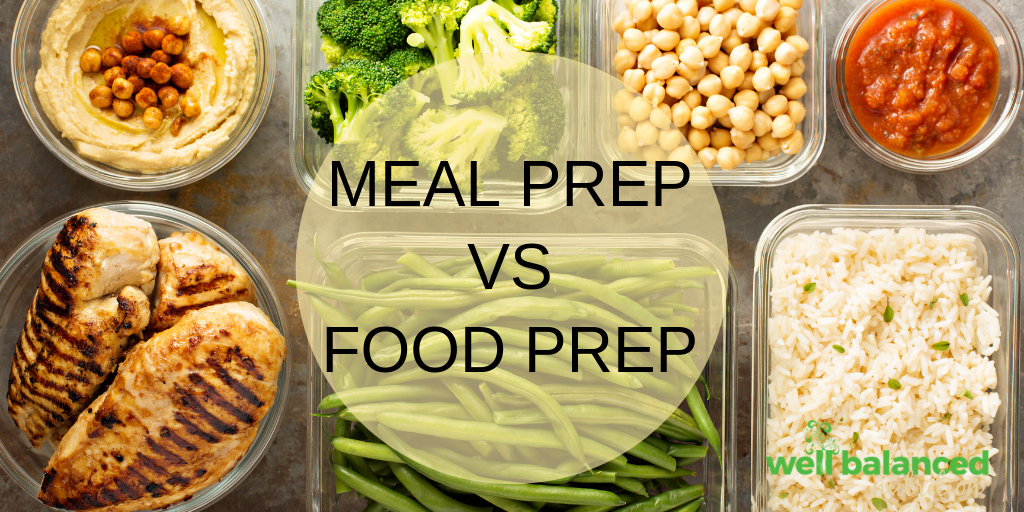
Together, we talked about options and solutions and I proposed she consider simplifying her food prep plans. All the recipes in cookbooks and Insta inspiration are great, but instead of thinking about preparing an entire meal we can start by incorporating food prep vs. meal prep.
What’s the difference between food prep and meal prep?
Whenever you think of a meal, I hope you picture the Well Balanced Nutrition plate, including half the plate filled with non-starchy vegetables (and/or fruits), happy protein, complex carbs, and a delicious fat to bring it all together.
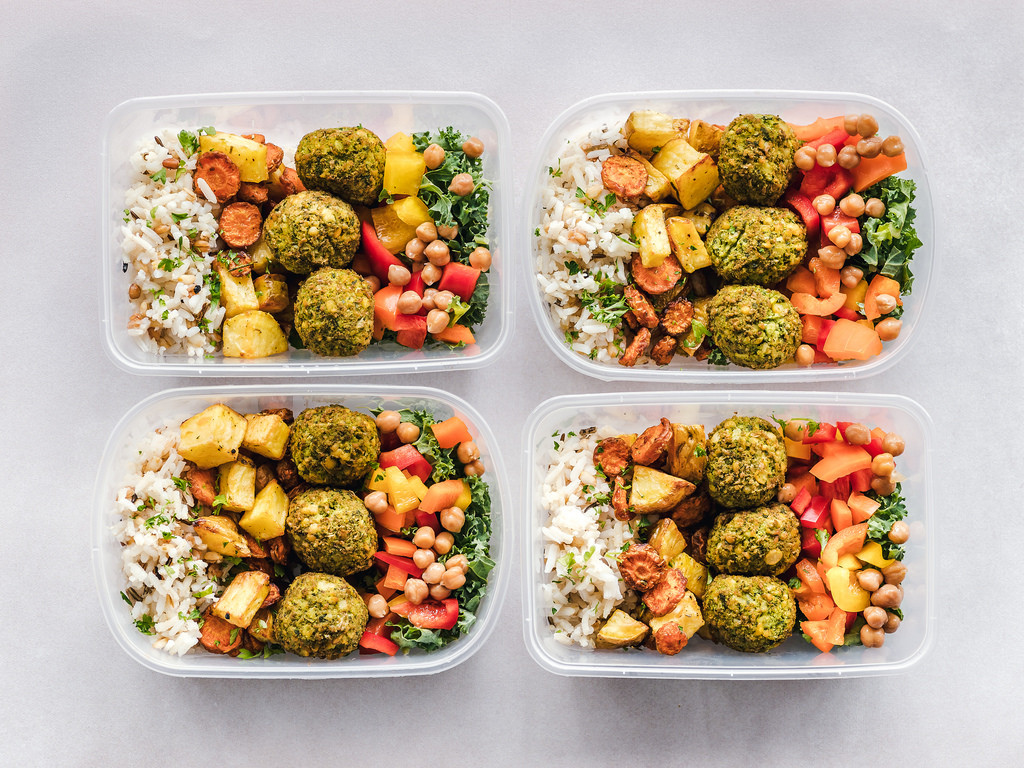
I will admit, it can be overwhelming to think of incorporating all of the things, all the time. Each time you eat is an opportunity to practice becoming Well Balanced. Instead of preparing meals with every component of the plate, I recommend starting with food prep. This can include making 2-3 dishes that you can later mix-and-match to combine into a meal. For instance, you can prepare a few servings of chicken salad to eat with a simple mixed greens salad or sliced cucumber and whole grain crackers. There is almost always a batch of quinoa or rice in my fridge, which can easily turn into a power bowl or Brown Rice Salsa Salad.
Meal prep may look like this…
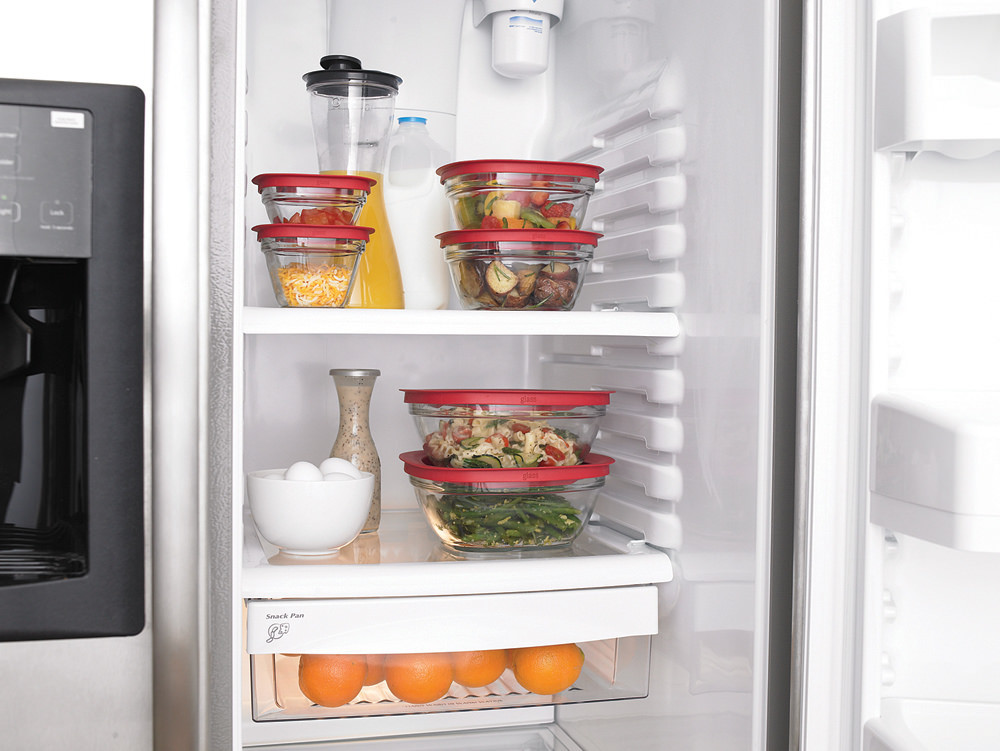
Food prep may look like this…
Food for thought
If you’ve been beating yourself up for not being a meal prep superstar this is a good chance to (1) be nice to yourself because we each need to figure out our own system. Next, (2) consider trying food prep instead of meal prep. Pick a few items you already feel confident preparing and try making those this week.
To provide the best experiences, we use technologies like cookies to store and/or access device information. Consenting to these technologies will allow us to process data such as browsing behavior or unique IDs on this site. Not consenting or withdrawing consent, may adversely affect certain features and functions.
Functional
Always active
The technical storage or access is strictly necessary for the legitimate purpose of enabling the use of a specific service explicitly requested by the subscriber or user, or for the sole purpose of carrying out the transmission of a communication over an electronic communications network.
Preferences
The technical storage or access is necessary for the legitimate purpose of storing preferences that are not requested by the subscriber or user.
Statistics
The technical storage or access that is used exclusively for statistical purposes.The technical storage or access that is used exclusively for anonymous statistical purposes. Without a subpoena, voluntary compliance on the part of your Internet Service Provider, or additional records from a third party, information stored or retrieved for this purpose alone cannot usually be used to identify you.
Marketing
The technical storage or access is required to create user profiles to send advertising, or to track the user on a website or across several websites for similar marketing purposes.