If you’re wondering, “how can I be healthy through the holidays?” You came to the right place! Today we are bringing you three steps to staying healthy this holiday season.
Step 1: Decide how you want to feel now and on January 1st.
The holidays are full of opportunities to savor food, friends, and fun. Be in the moment and enjoy what matters to you. But don’t forget about your future self. Do you want to wake up the next day feeling bloated and tired? Do you want to wake up in the New Year feeling like you have to start a diet or detox program?
Instead, grab a journal or scrap piece of paper and decide how you want to feel through the holidays and on January 1st. Maybe you want to feel energized, healthy, joyful, confident, or empowered. By writing it down, you direct your inner compass to make intentional choices all season long. Think about what matters most to you this holiday season, savor and enjoy that and let the rest go. Sharing time with loved ones baking cookies may be a cherished activity, but the store-bought cookies at a work party with a lot less meaning may be easy to pass up if you think about it.
Step 2: Know your triggers!
These are the foods, situations, or a time of day that we tend to make our least healthy choices. Have you noticed you crave a sweet treat around 3 PM or 9 PM? That could be a trigger time of day. Or every time you walk by the break room, there seems to be another holiday goodie sitting out, and your brain says, “just one bite won’t hurt!“ These situations may be a trigger for you.
After you’ve determined what triggers your not-so-healthy choices, you can start to set yourself up for success by finding better afternoon or bedtime treats, such as these yummy gingerbread bites or a piece of fruit with nut butter. Also, consider the occasional permission slip. That’s the permission to enjoy that special treat as long as you do so mindfully and sitting at a table (versus hiding in the pantry eating cookies – yea, we’ve been there too!).
This may seem obvious, but it’s easy to get out of a healthy routine during the holiday season. That means continuing to eat regular meals and snacks if snacks are a part of your routine. Skipping meals increases our stress hormone levels, causes us to make poor food choices, and sometimes leads to overeating at the next meal.
Well-Balanced Day:
Breakfast: 1 small baked sweet potato + 2 scrambled eggs + 1/4 to 1/2 avocado Lunch: 1 cup vegetable soup + 4-6 oz roasted chicken + 1 whole grain roll Snack: a handful of cashews Dinner: Spaghetti squash + sautéed onion and peppers + turkey sausage Snack: 2 dates + 1 Tbsp. your favorite nutbutter
Food for thought:
Which step do you need to focus on to feel GREAT in the new year?
Need help getting started? We’re happy to chat and help you reach your health and wellness goals. Click hereto talk to your friendly dietitians!
When it comes to eating, most of us need some structure.
We need to eat regularly. We need to make sure we’re getting enough food and nutrients and have food available when we’re hungry. And more often than not, having a plan makes healthy choices much easier.
But too much structure can become rigid. And too little structure can leave us constantly making food decisions when we’re tired, busy, or really hungry.
That’s where the Diet Spectrum comes in.
The Diet Spectrum
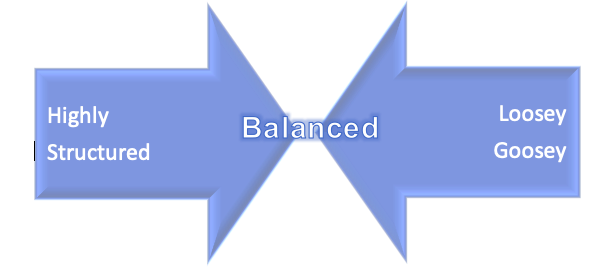
On one end, we have highly structured eating.
This might look like following a very specific diet, having lots of food rules, or feeling like you need to eat “perfectly” to stay on track.
On the other end is very little structure… “loosey goosey” as we like to say.
There may be few routines or plans around food. Meals might be decided at the last minute, skipped when you’re busy, or based mostly on whatever sounds good or is easiest in the moment.
Neither extreme is necessarily the goal.
For most people, balance lies somewhere in between.
What does balanced eating look like?
Balanced eating means having enough structure to support you, while leaving enough flexibility for real life.
That might mean:
Planning some meals ahead but not needing to plan every bite
Keeping enjoyable, nourishing foods available and convenient
Eating regularly so you aren’t constantly getting overly hungry
Having some go-to meals and snacks
Enjoying restaurant meals, dessert, vacations, and spontaneous plans
Being able to adjust your plan when life doesn’t go as expected
The amount of structure you need may look different from someone else’s.
For example, someone with celiac disease will need very specific food boundaries and that’s okay. Someone who routinely skips lunch because they’re busy may need to incorporate more structure.
Balance isn’t about everyone eating the same way. It’s about finding the amount of structure that helps you feel supported without making food feel like a set of rules you have to follow perfectly.
When the pendulum swings
Do you ever find yourself bouncing between the extremes?
You might start Monday with a strict set of rules:
“No sugar. No eating out. I’m going to be really good this week.”
For a while, you feel in control.
Then real life happens. You eat something that wasn’t part of the plan. Maybe you decide you’ve “blown it,” and the rules go out the window.
Suddenly, you’re on the other side of the spectrum. Not caring at all.
Then the guilt kicks in, and you decide it’s time to get back on track.
And the cycle starts again.
The answer isn’t necessarily to find an even stricter plan. Often, it’s to step off the pendulum altogether.
Finding your Well Balanced place
Ask yourself:
Do I have enough structure around food to support the way I want to eat?
Then consider:
Could I benefit from a little more planning?
Do I have enough flexibility when plans change?
Are my food rules helping me, or making eating feel stressful?
What happens when I eat something that wasn’t part of the plan?
Am I relying on willpower when a little preparation could make things easier?
You may discover that you need more structure.
Or you may discover that you need more flexibility.
For many people, the answer is a little of both.
The goal isn’t perfect balance.
Some weeks will be more structured. Some will be more spontaneous. Some seasons of life may require more planning than others.
Well Balanced eating isn’t about staying perfectly in the middle of the spectrum. It’s about having enough structure to support you, enough flexibility to enjoy your life, and the ability to move back toward balance when things get off track.
That’s a much more sustainable place to be.
Food for thought
This week, instead of asking yourself “Am I being good?”, try asking:
“Would a little more structure or a little more flexibility help me right now?”
Sometimes one small adjustment is all it takes to move toward a more balanced approach to food.
Do you want to find more balance in your diet and lifestyle?Let’s chat!
It’s rare that I meet someone who doesn’t have a sweet tooth. Some of us struggle more than others with sweet cravings. How do we choose to indulge our sweet tooth (or not to) in a healthy way? Here are four mindfulness strategies:
Mindful Pause
Oftentimes, we crave sweets because of some underlying thought or emotion that drives a desire for something comforting. When the craving hits, taking a mindful pause allows us to become aware of our emotions, senses, and actions. We may be frustrated, stressed, tired, or bored and looking to escape those uncomfortable feelings. Unfortunately, we all know those feelings won’t disappear by eating chocolate (although, that would be awesome!). Yet our brain seems to think it will work every time. A little mindfulness and a full toolbox of ways to soothe yourself without food can go a long way when it comes to managing that sweet tooth.
Sort Through the Craving
Ask yourself, do I really want this, or is my primitive brain just craving it because it’s there, free, tempting, etc? If we always follow that primitive drive to indulge, we could end up far from our goals. Having a way to sort through a craving can help. I like to ask myself questions to gather more information. How bad do I really want this? Willt his craving pass pretty quickly? Is this craving for something special and unique? Does this help me meet my needs? Is it going to make me feel good or lousy? Is the experience going to be worth it? For instance, the candy from a jar at work… although delicious, probably not very special. I might devour it as I walk to the water jug without actually experiencing it. But a melt-in-your-mouth s’more when you are on a family camping trip or a decadent homemade pie you only get once a year around the holidays that you sit down to savor with people who mean the world to you… those are the kind of treats that I call worth it. Simply putting a little thought into your decision can help you decide to pass or go on a sweet treat.
Give Yourself Permission
When food is off-limits, it gains power. It’s always your choice to honor a craving or ride it out and let it pass. When you take a mindful pause and sort through it, you can then consciously ask yourself if you still want that food. Give yourself permission to say yes without any judgemental thoughts (like I’m being bad or I’m cheating). Once you do, ironically, it will be much easier to say no if you want to.
Love What You Eat
Cravings can come on for various reasons, but being too restrictive or eating bland food can definitely trigger more cravings. If you aren’t enjoying your food, maybe it’s time to look at how to put more joy and flavor onto your plate. This is different for everyone. Perhaps this means adding a bit of honey and cocoa powder into your morning smoothie, making a flavorful sauce to go on top of your meat and roasted veggies, or ending your meal with fruit or, dare I say, chocolate sometimes!
How can you combat cravings before the start?
Eating Well Balanced Meals can help you stop cravings before they start. If you are not getting the right combination of fat, protein, or carbohydrates at each meal, this could lead to cravings. Schedule an appointment today if you’d like help in this area.
Food for thought:
What food(s) are truly special to you?
What foods do you crave when you are stressed, tired, lonely, or sad?
How will you use this mindful activity to help you manage your cravings? If you like these ideas and want to learn more, we’re happy to help 🙂
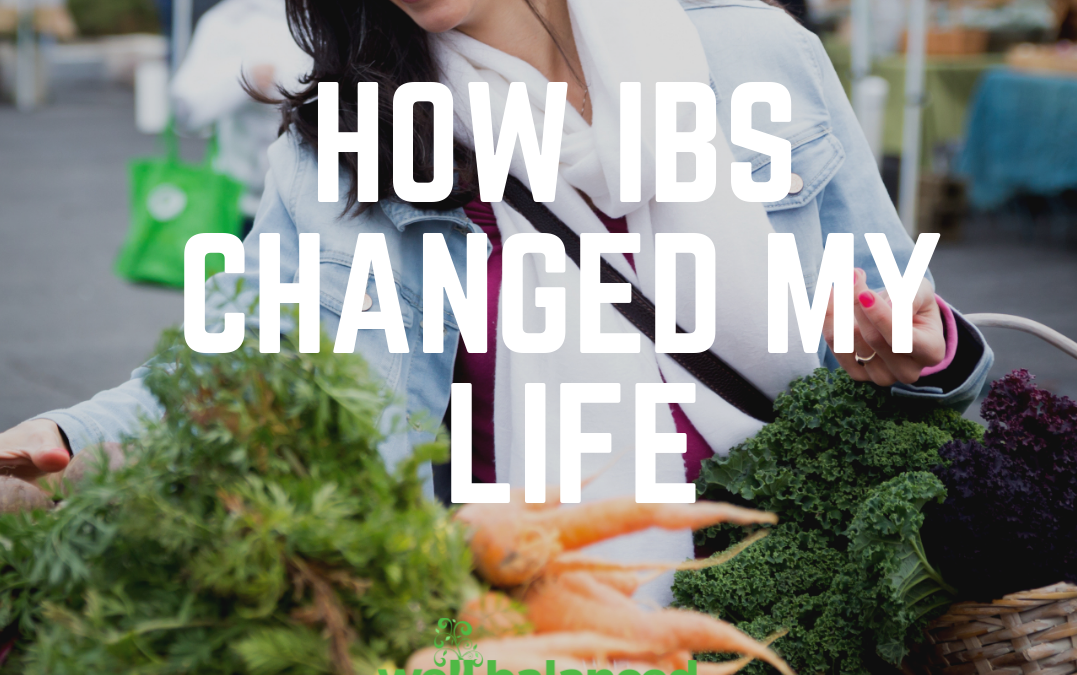
Why me? It’s not fair. How did this happen? For 1 in 5 American’s suffering from irritable bowel syndrome (IBS), these are common thoughts and questions that cross the mind. Maybe after a weekend of eating out and enjoying food with friends and family suddenly, cramping, bloating, and discomfort takes over the gut and all you can do is curl up and wait until it passes.
Most of my life I was blessed to eat anything I wanted – I joke that I grew up on Ramen noodles, Pop-tarts, and a lot of chicken casseroles (including broccoli and cauliflower!).
Then came 2012
For 7 years prior to 2012, I was practicing a flexitarian diet, which for me included eating mostly plant-based foods such beans, tofu, peanut butter, and I even started eating lentils. Unfortunately, in November 2012 I contracted a stomach virus. It included a lot of pain and bloating for about five weeks and I lost weight, which at my size was not healthy. When that was over I tried to resume my normal diet. This consisted of salads, plenty of broccoli, apples, and other delicious colorful foods. The problem was some of those same symptoms I had during the virus stated to crop up unexpectedly in the middle of the day or after dinner. More pain. More bloating. But no more virus. I spoke with a good friend (also a dietitian) who recommended I look at eliminating the FODMAP foods – stands for Fermentable Oligosaccharides, Disaccharides, Monosaccharides, and Polyols. For anyone unfamiliar these are foods that have a particular kind of naturally occurring sugar, which are linked to some cases of IBS. She was right! When I stopped eating apples I stopped feeling awful after lunch, at least for a little while. Then by May 2016 while traveling up to Michigan to see my honey I hit a wall (not literally!), but I got fed up with feeling awful. I decided it was time to find out once and for all what was causing my gut issues. I went on an anti-inflammatory elimination diet. These come in all shapes and sizes – I gave up many common culprits including grains, dairy, fermented foods, and legumes. Gasp! At this point you might be thinking “what did you eat?!” For anyone that has done a Whole30 you know that fruits, vegetables, and meat/seafood become the bulk of what you are consuming. During that time, I discovered almond butter isn’t so bad and coconut flour is very versatile and delicious. Otherwise, I started to recognize and address my emotional relationship with food. Turns out, a lot of IBS symptoms are heavily influenced by the gut-brain connection and can be affected heavily by stress and hormones.
So many pity parties
During the first elimination I only committed to 21 days because I knew it was going to be challenging. I learned a lot about my habits, but I did it didn’t give me any conclusive information about what was causing my symptoms. Luckily, my lovely brilliant business partner, Kristen Norton, introduced me to MRT or mediator release testing option, which I did in February 2017. This blood test shows the inflammatory response your body has to 170 foods/chemicals. The test revealed some surprising information, which lead to a significant change in my diet and lifestyle for the next 18 months (and counting). In the beginning, when I first got my results I cut down to eating from a list of 30 approved non-inflammatory foods. Considering on average we consume 700 to 1000 foods and chemicals each week this was a very creative time for me. Who knew all the different ways you could prepare rice, sweet potatoes, tilapia, and carrots? After the MRT results I was informed that alcohol is a huge trigger for IBS symptoms or flare-ups and was advised to stop drinking at least for the first month. Oh, the pity parties. I quickly learned that Friday was a huge trigger for having an alcoholic beverage. I kid you not, it wasn’t until October 13, 2017 that I was finally journaled my first Friday in 8 months that I didn’t crave an adult beverage on Friday night. I promise I don’t have a drinking problem, it was a groove in my brain (aka habit) formed starting in college and apparently became a way of life for the following decade. Not to mention, some of my other favorites I needed to stop eating like lettuce, soy-products, and Duke’s mayonnaise (darn paprika and lemon juice). I cried a lot those first several weeks. Yet, I was finally able to truly empathize with my clients who are doing even harder things in the name of their health and well-being.
What’s the lesson?
While this is still a hard subject for me to talk about, I feel so much better now than I did when I was eating in a way that wasn’t serving my body. Our mission at Well Balanced Nutrition is teach, empower, and connect women that want to feel confident in their food choices and bodies. My body was telling me that my old flexitarian diet was no longer serving me. Our bodies are talking to us all the time. The trick is learning to tune in, listen with compassion, and sometimes swim against the stream to make changes necessary feel our best.
Food for thought What is your body telling you? The first step is tuning in. Next, I encourage everyone to spend time thinking about what better feels like. How will your life change when you feel better? Lastly, you don’t have to do this alone. We can help.
The other morning I was reading a great book by Kate Northrup titled Money: A Love Story. This is not your typical financial planning book. Instead, it’s an opportunity to take a mindful journey to understand and develop a healthier relationship with money. Northrup goes on to explain there are a lot of feelings and emotions around money and anybody that says otherwise is not being truthful with themselves.
Kristen and I would venture to say the same thing about food. When somebody is having issues making a change their diet, I have to tell them it’s rarely about the food. For instance, if you find yourself craving comfort foods, we may suggest that you are in need of more connection and/or love (or a good nights sleep!). We tend to seek comfort in the form of food if we feel isolated, disappointment, sad, overwhelmed, etc. Other healthier coping tools would include volunteering, calling a friend, playing with your furry or not-so-furry child or taking a walk.
As I continued reading and journaling, as prompted by Northrup, I suddenly had the urge to check my bank account. That is when I realized all the money for rent was still sitting in the bank account, which means I was at least two days late paying our rent. *palm to the face* Luckily, I was in full fledge observation mode and just started journaling my thoughts in that very moment. Do you know what I’ve discovered? I am a jerk face to myself! I was instantly telling myself that I’m an idiot and I should know better. So it was demoralizing and unproductive.
As a person who fancies herself as self-aware, it was incredibly surprising to have this bombardment of negative self talk flood my mind. Soon there were tears and I felt even more ridiculous for crying over $50. Seriously.
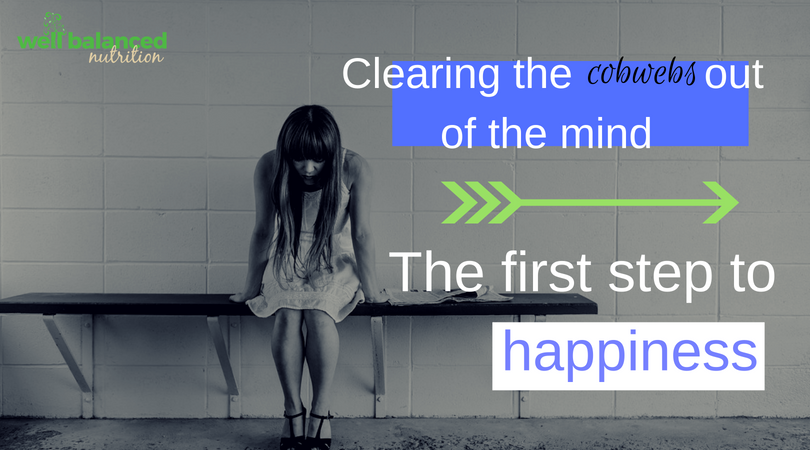
Fast forward to a few hours later and I’m walking through the woods.… Catching cobwebs. It got me thinking that these negative thought patterns are kind of like cobwebs in our minds. We’ve built them in without even realizing that they are making this journey to happy and healthy a lot less pleasant.
The first step
Today I’m encouraging each of you to just notice when you have a negative thought run through your mind. Anything such as, “you idiot!” Or “you should have…” Or “you know better. Why do you keep making the same mistake?!”
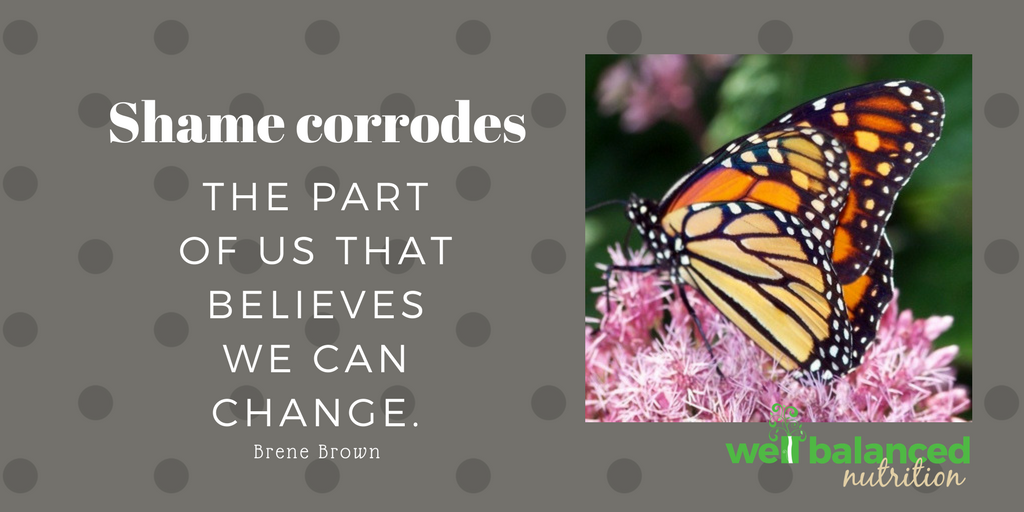
We now know that this is self shaming and as Brene Brown reminds us shame corrodes the part of the brain that believes that we can change. In short, shame does not help you do better. In fact, it will probably perpetuate the same negative behaviors. When we notice the negative thought patterns we can start to change them. I often teach friends and clients to try Cancel. Cancel. Cancel. when they first notice the negativity. Then create a helpful mantra or affirmation to replace the thoughts. Sometimes it can be as simple as repeating “release.” Or as Northrup mentions in her book, “I am pure, calm grace.” Important note: the affirmation needs to resonate with you. That means when you find an uplifting quote or phrase make sure it is speaking your truth. Do you believe and embody it?
Food for thought:
It always seems easier to help others recognize these negative thought patterns. Do you have a friend or loved one that you trust that could help you see where you might be allowing these negative thought patterns and cobwebs of the mind to hold you back?
Kristen and I are happy to help you clear the way and make a more enjoyable journey into your happy and healthy – let us know how we can help?
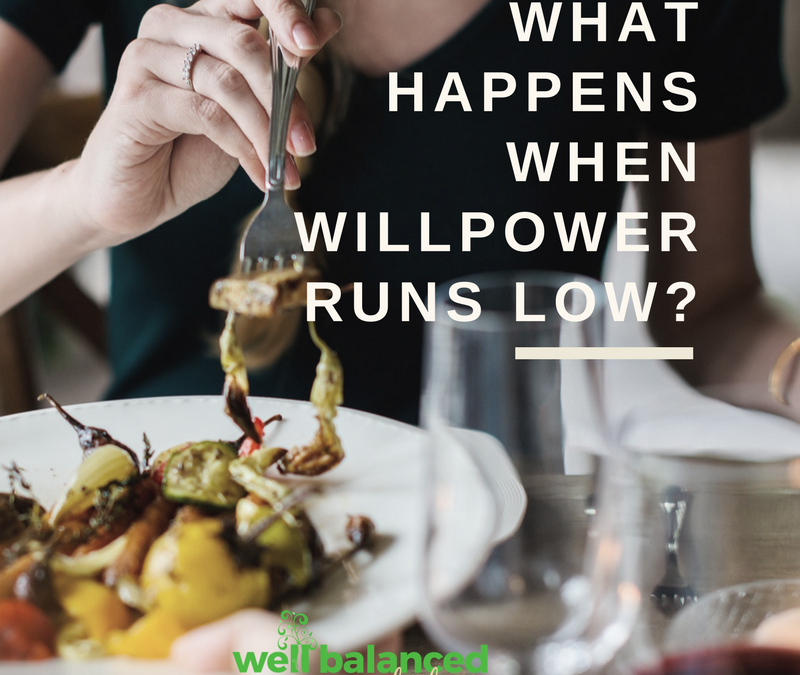
Before going out to for Italian food with friends, Lisa thought she would order the baked chicken parmesan with a salad. Once at the restaurant, hungry and exhausted from an overwhelming workweek, she ordered the ooey gooey cheesy lasagna and ate it all. Then, Lisa woke up the next morning two pounds heavier and feeling shame and guilt wash over her. If you found yourself relying on willpower to make your healthy food choices you may have had a similar experience. This often comes from a diet mentality. It’s the thought pattern ‘as long as I can be good I will be able to [fill in the blank],’ that leads us to drain the willpower tank because we overthink every decision and default into old habits.
At the beginning of each day, most of us wake up feeling confident and determined “today’s the day, I’m going to be healthy!” As we go throughout the day making thousands of decisions and using our mental and physical energy, our tank may get depleted. That is when you find yourself craving something crunchy, salty or sweet around 3 PM (or if you’re like me it’s at 9 PM). Either way, we know willpower is not the solution to living a healthy Well-Balanced life.
3 steps to keep your willpower tank full
Notice when you’re relying on willpower. Recognize that little voice in your head saying; no, I won’t eat the free bagels in the break room today. Yep, that is good old willpower going to work for you. There is some evidence that states, I won’t statements deplete our willpower more rapidly. First, notice when you are denying yourself something that your brain is craving. Kristen describes it as riding the crave wave. It is okay because most cravings pass.
Replace ‘I won’t’ with ‘I want.’ Once you’ve noticed the I won’t, you can start to change your thoughts to include ‘I want [something better that will help me reach my goals].’ For instance, if your brain saying I won’t eat the leftover cake that someone brought to work, instead, I want my delicious egg muffins and fruit smoothie, because it gives me the energy I need to do my job. Or simply I want to eat Well-Balanced and I know those donuts will just lead me to a sugar crash and make me feel awful later.
Create a new normal – aka automation. Research claims up to 95% of all we do is subconscious. Think about the last time you took a shower. Did you stop and think ‘Now I pour the soap. Now I wash my hair. Now I shave my legs…’ Unlikely! It just happens, right? Same goes for food. Our brains are designed to keep us alive, not help us reach our ultimate health and well-being. When the brain senses energy-dense foods, like cheese and French fries, it sends signals to keep eating in case you experience scarcity or famine. Setting up healthier habits, such as packing a sandwich with baby carrots and an orange for lunch instead of relying on whatever you can find near the office will eliminate the task of making another decision.
Food for thought:
Is a diet mentality holding you back? It is common – even socially acceptable and encouraged – to reward ourselves with a special treat. This behavior pattern may have started in childhood when our well-meaning teachers or caretakers would supply candy or snack foods for good behavior. On the road to Well Balanced, there is an important step in recognizing what habits are holding us back. We invite you to take the Diet Mentality Assessment to pinpoint where your downfalls might be sabotaging your health, weight, and wellness goals.
To provide the best experiences, we use technologies like cookies to store and/or access device information. Consenting to these technologies will allow us to process data such as browsing behavior or unique IDs on this site. Not consenting or withdrawing consent, may adversely affect certain features and functions.
Functional
Always active
The technical storage or access is strictly necessary for the legitimate purpose of enabling the use of a specific service explicitly requested by the subscriber or user, or for the sole purpose of carrying out the transmission of a communication over an electronic communications network.
Preferences
The technical storage or access is necessary for the legitimate purpose of storing preferences that are not requested by the subscriber or user.
Statistics
The technical storage or access that is used exclusively for statistical purposes.The technical storage or access that is used exclusively for anonymous statistical purposes. Without a subpoena, voluntary compliance on the part of your Internet Service Provider, or additional records from a third party, information stored or retrieved for this purpose alone cannot usually be used to identify you.
Marketing
The technical storage or access is required to create user profiles to send advertising, or to track the user on a website or across several websites for similar marketing purposes.