In January 2026, the government released new dietary guidelines in which they state, “We are ending the war on protein.” This might make you scratch your head and wonder when were we at war with protein? We’re baffled too. There is one thing for certain: protein is buzzing, and we are seeing it highlighted more frequently on food labels, menus, and marketing. If it has you questioning if you are getting enough protein, you aren’t alone. It’s a common concern we are hearing and why we are covering it today.
Understanding Protein: Health Benefits and Daily Protein Needs
Protein is one of the three macronutrients, alongside carbohydrates and fats. It is made up of amino acids, which are the building blocks your body uses to:
- Build and repair muscle tissue
- Support immune function
- Create enzymes and hormones
- Maintain skin, hair, and nails
- Provide a feeling of fullness and steady energy
Getting adequate protein is especially important for:
- Adults over 40, due to age-related muscle loss
- People in a calorie deficit
- Those who strength train regularly
- Individuals with insulin resistance or blood sugar concerns
That said, getting more is not always better. Intakes far beyond needs do not provide additional benefit and can crowd out fiber-rich carbohydrates and healthy fats.
How much protein do you actually need?
The OLD recommendations:
For many years, protein recommendations were set at about 45 grams per day for women and 60 grams per day for men. This recommendation was established by the Institute of Medicine as part of the Dietary Reference Intakes.
What’s important to understand is that this number was designed to prevent protein deficiency in healthy adults. The research relied heavily on nitrogen balance studies, which measure whether the body is losing protein, not whether it is thriving.
As nutrition science evolved, research began to show that higher protein intakes better support muscle maintenance, metabolism, blood sugar control, and healthy aging, especially for women, older adults, and active individuals. The updated dietary guidelines now reflect what many dietitians have known for a while: protein needs vary, and the original minimums are often not enough for optimal long-term health.
The NEW recommendations:
Your ideal protein intake depends on your health, age, body composition, and level of physical activity.
- General health and active adults need: ~1.2–1.6 g per kg of body weight/day (or 0.55–0.73 gram of protein per lb of body weight)
- EXAMPLE: 150lb healthy adult (68 kg) with regular activity level
- 68 kg × 1.2–1.6 g per kg ≈ 82–109 g protein per day
- EXAMPLE: 150lb healthy adult (68 kg) with regular activity level
- For muscle building, aging adults, or weight loss phases aim for: ~1.2–2.0 g per kg of body weight/day (0.55–0.91 gram of protein per lb of body weight)
- EXAMPLE: 150lb adult who is focused on muscle building, healthy aging, or weight loss, eating up to 136 g a day may be beneficial.
- 68 kg × 1.2–2.0 g per kg ≈ 82–136 g protein per day
- EXAMPLE: 150lb adult who is focused on muscle building, healthy aging, or weight loss, eating up to 136 g a day may be beneficial.
Don’t want to do the math? Try this easy-to-use protein intake calculator to see what your minimum protein intake should be based on your weight and current health goal as well as a higer level for maximum results toward muscle gain or weight loss.
Notice you can meet your protein needs anywhere within range—no need to stress about a single number. Hitting the range most days supports your health and consistency more than chasing an exact gram amount. One way to stay on track is by focusing on healthy protein habits.
Healthy Protein Habit #1: Getting protein from a variety of sources.
Protein quality is often discussed in terms of amino acid profile and digestibility. You may hear proteins described as “complete” or “incomplete,” which can sound more concerning than it needs to be.
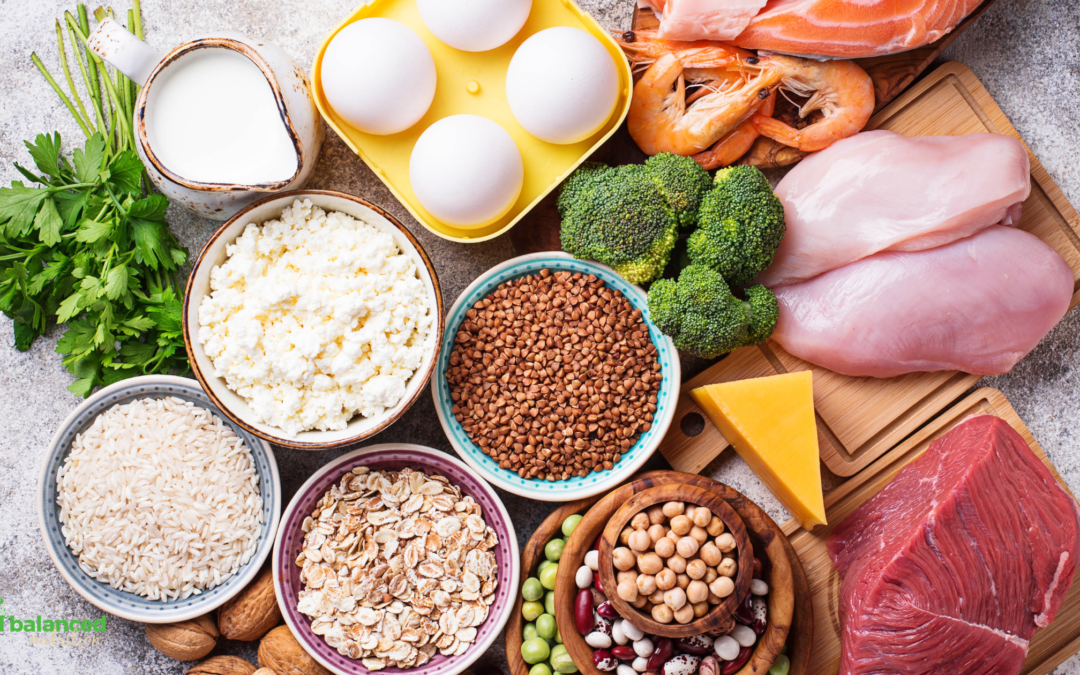
Complete proteins contain all nine essential amino acids that the body cannot make on its own. These include foods such as meat, poultry, fish, eggs, dairy, and soy products.
Incomplete proteins are missing one or more essential amino acids. This includes many plant foods like beans, lentils, nuts, seeds, and whole grains. (Also of note: collagen is not a complete protein source.) On their own, these foods may not provide every essential amino acid in ideal proportions, but this is not a problem when they are eaten as part of a varied diet.
Research consistently shows that total protein intake across the day matters far more than creating “perfect” amino acid combinations at each meal. The body maintains an amino acid pool and draws from it as needed, meaning proteins do not have to be paired precisely in real time to be effective.
Bottom line: You do not need to combine proteins perfectly at every meal. Focusing on overall protein intake and including a variety of protein sources throughout the day is more than enough to support health.
Healthy Protein Habit #2: Eating protein at every meal.
Even though precise protein pairing isn’t necessary at each meal, how protein is distributed across the day still matters. It’s easier to meet your protein needs and see the benefits when you eat protein at each meal.
The body has no long-term protein storage site like glycogen for carbohydrates or adipose tissue for fat. Protein is broken down into amino acids and used first for essential functions such as muscle repair, enzymes, hormones, and immune support. Any extra amino acids are used for energy or converted less efficiently into glucose or fat, which is why you can’t “bank” protein at one meal and rely on it later.
A practical target:
• Include a protein-dense food at each meal
• Aim for roughly 20–35 g per meal for most adults (adjust for body size, age, and goals)
This approach supports:
• Better muscle maintenance
• Improved fullness between meals
• More stable energy throughout the day
And for reassurance: you do not need to eat protein every two hours, and exact timing is unnecessary unless you’re an elite athlete.
Start Gradually If You’re Low on Protein Now
If your current meals are low in protein, jumping straight to 20–35 g per meal can feel like a lot. You may feel super stuffed trying to meet your goal, especially if you’re not using protein-dense foods. If this is the case for you, check out How to Get More Protein in Every Meal Without Overeating.
FAQ about protein
Can protein help with weight loss and weight management?
Yes. Protein supports weight management through multiple mechanisms supported by strong evidence:
- Increased feelings of fullness compared to carbs or fat
- Your body burns more calories digesting protein compared to carbs or fat
- Preservation of lean mass during weight loss
This does not mean high-protein diets are magic. They work best when paired with:
- Adequate fiber
- Appropriate total energy
- Consistent meals
- A pattern you can maintain
If protein intake increases but total calories remain excessive, weight loss will not occur. If protein intake is too low during weight loss, muscle loss is more likely.
Balance is the goal.
Can you get enough protein from plants?
Yes, but it usually requires a bit more intention.
Plant proteins tend to be:
- Lower in certain essential amino acids
- Less concentrated per serving
Helpful strategies:
- Consider higher-protein options like tofu, tempeh, edamame, and lentils
- Include a higher protein option at every meal
- Combine multiple protein sources at each meal
Is too much protein bad for your kidneys?
For healthy individuals, higher protein diets are considered safe.
Concerns mainly apply to people with existing kidney disease, who should follow individualized guidance.
Do I need protein right after a weight-lifting workout?
Unless you are a serious weight lifter, you don’t need to panic about a “30-minute window,” but timing still matters.
Aim to eat protein within a couple of hours after exercise
Are protein powders, drinks, and bars necessary?
Not at all, but they can be helpful.
They’re useful for:
– Busy mornings
– Post-workout convenience
– People who struggle to meet protein needs through food alone
Think of them as a tool, not a requirement.
The Well Balanced takeaway
Protein is important. It is not something to fear or obsess over.
When protein intake is:
- Adequate
- Spread across the day
- Varied
- Paired with fiber and healthy fats
- Built into meals you enjoy
…it supports energy, strength, metabolism, and long-term health.
If you feel stuck trying to “get protein right,” we’re happy to help.
That is where personalized nutrition support makes a difference.