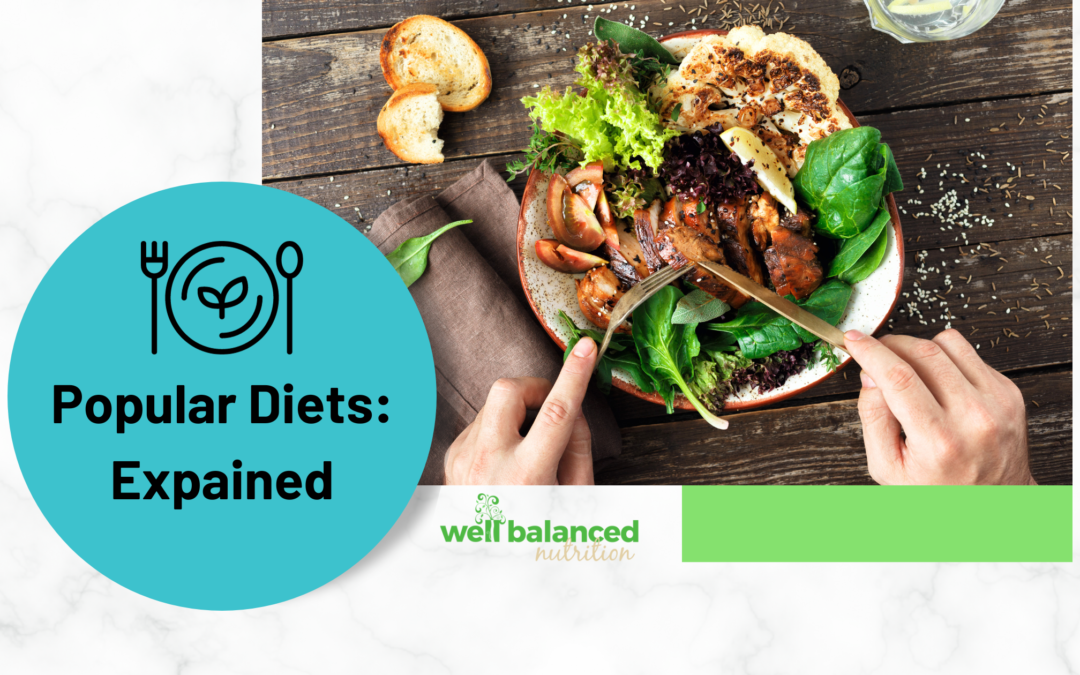
Are you curious about popular diets that everyone is buzzing about? You’ve probably heard of keto, paleo, intermittent fasting, veganism, and the Mediterranean diet. But what exactly are they, and how do they work? And most importantly, are they good for you and your goals? In this article, we will compare these five diets and tell you the pros and cons of each one. We will also give you some tips on how to pick the best diet for you and your lifestyle.
Keto: The Low-Carb, High-Fat Diet
The keto diet is a diet that limits your carbs and emphasizes the addition of more fats. The idea is to put your body into a state of ketosis, where your body burns fat instead of glucose (sugar) for energy. Reaching this state by following the keto diet may help you lose weight fast, as well as improve your blood sugar, inflammation, and brain function [1] [2]. But the keto diet also has some downsides, such as possible nutrient deficiencies, digestive issues, higher cholesterol levels, and a higher risk of kidney stones [1] [2] [3]. These downsides may make keto a risky choice for individuals with diabetes, kidney disease, liver disease, or pregnant or breastfeeding women.
It’s also important to mention that for many, sticking with this diet long-term is very difficult. It excludes several healthy foods and requires a lot of forethought to stick to such a low-carb diet. This could lead to “yo-yo dieting,” and we know that rapid weight loss fluctuations are associated with increased mortality.
There are several health conditions for which keto is absolutely contraindicated, such as Porphyria and genetic deficiencies like fatty acid beta-oxidation defects. [18] Other contexts haven’t had much, if any, keto research, and caution is warranted, such as with pregnancy and eating disorders.
Paleo: The Ancient Diet
The Paleo diet is a nutritional approach that mimics the dietary patterns of our ancestors during the Paleolithic era before modern farming practices. This diet promotes the consumption of whole foods like meat, fish, eggs, nuts, seeds, fruits, and vegetables and avoids grains, beans, and dairy while limiting refined sugars, processed foods, and oils. This way of eating can be very satiating due to the hunger-crushing properties of the foods you will be eating (protein, fiber, fats).
A paleo eating pattern may help you lose weight, lower your blood pressure and cholesterol, reduce inflammation, and prevent chronic diseases [4] [5]. In general, the paleo diet can be a good option for people with allergies or intolerances to certain foods. Despite limiting grains, beans and dairy, it can still be a very Well Balanced diet. However, it also has some drawbacks to be aware of. The paleo diet’s strict emphasis on whole foods can make it restrictive, expensive, difficult to follow in social situations, and lacking in some nutrients such as calcium and vitamin D [4] [5] [6].
Intermittent Fasting: The Time-Restricted Diet
Intermittent fasting is a diet that changes when you eat rather than what you eat. Individuals following this dietary plan alternate between periods of fasting and eating. There are different ways to do intermittent fasting, such as eating within an 8-hour window every day (16/8), eating normally for 5 days and cutting calories to 500-600 on 2 days (5:2), or fasting every other day (alternate-day).
Like other diets, intermittent fasting can lead to weight loss from eating fewer calories. It can also improve blood sugar levels, insulin sensitivity, inflammation markers, and brain health [7] [8]. On the other hand, intermittent fasting can also have some negative effects that make it risky for people with diabetes, low blood pressure, eating disorders, and pregnant/breastfeeding women. These negative effects include intense hunger pangs, headaches, fatigue, irritability, mood swings, and binge eating [7] [8] [9].
Vegan: The Plant-Only Diet
The vegan diet excludes all animal products like meat, fish, eggs, dairy, honey, and gelatin. The vegan diet can improve your health, lowering your chance of getting heart disease, diabetes, obesity, and some cancers. Veganism can also help you lose weight and improve your digestion, and it has the added bonus of protecting the environment [10] [11] [12].
The vegan diet is not without its challenges, though. Many individuals following this diet struggle to get enough protein, iron, calcium, vitamin B12, and other nutrients that are primarily found in animal foods [10] [11] [13]. In some places or situations where vegan food is hard to find or not available, you may find the vegan diet too difficult to follow. Going vegan requires careful planning, supplements, and learning to avoid potential problems or deficiencies.
Mediterranean: The Healthy and Tasty Diet
Focusing on whole, plant foods, the Mediterranean diet is based on the traditional eating patterns of people living in countries around the Mediterranean Sea, such as Greece, Italy, and Spain. The Mediterranean diet emphasizes consuming fruits, vegetables, whole grains, beans, and nuts, with some fish, poultry, eggs, and dairy products. It also promotes healthy fats such as olive oil and nuts while limiting red meat, processed foods, added sugar, and salt. The Well Balanced approach is most in line with this way of eating.
The Mediterranean diet is widely known as one of the best diets in the world, as it can lower your risk of heart disease, stroke, diabetes, obesity, and dementia [14] [15] [16]. It can also help you lose weight, improve your mood, and enhance your longevity [14] [15] [16]. The Mediterranean diet is easy to follow and adapt to different cuisines and tastes.
How to Choose the Best Diet for You
As you can see, there is no one-size-fits-all diet that is guaranteed to work for every individual. Each diet has its benefits and drawbacks, and the best diet for you depends on your goals, needs, and preferences.
Before committing to a diet, check out these tips to help you choose the best for you:
Talk to your doctor and a registered dietitian before starting any new diet, especially if you have any health issues or take any medicines. Your doctor can help you check your health status and advise against any contraindications to a diet you may be considering. A registered dietitian can further assist you in deciding what nutrition plan is appropriate, create sensible action steps, and help you monitor and continue your progress.
Consider your lifestyle and preferences. Choose a diet that fits your schedule, budget, culture, and taste buds. A diet that is too restrictive or incompatible with your lifestyle will be hard to stick to and may cause more harm than good.
Do your research and educate yourself. Learn about the pros and cons of each diet, the science behind them, and the possible risks and benefits to your health. Be sure to look for reputable sources of information, such as peer-reviewed journals, government websites, or registered dietitians. Avoid falling for fad diets or miracle claims that sound too good to be true.
Experiment and find what works for you! You don’t have to follow a single diet strictly or forever. You can try different approaches and see how they affect your weight, health, and well-being. Consider mixing and matching elements from different diets to create your own personalized plan. One of our dietitians can help you with this process until you have a very individualized plan. The most important thing is to find a beneficial diet you enjoy and can sustain long-term.
In Summary
Many popular diets today claim to help you lose weight, improve your health, or achieve other goals. However, not all diets are created equal; some may be more suitable for you than others. The keto diet, the paleo diet, intermittent fasting, the vegan diet, and the Mediterranean diet are some of the most popular diets today, and each one has its pros and cons. To choose the best diet for you, you should consult your doctor, meet with a dietitian, consider your lifestyle and preferences, do your research, and experiment with different options. Finally, remember that the best diet is the one that you can stick to and that makes you feel truly good!
Sources:
[1] Masood W et al., Ketogenic Diet – StatPearls – NCBI Bookshelf https://www.ncbi.nlm.nih.gov/books/NBK499830/
[2] Crosby L et al., Ketogenic Diets and Chronic Disease: Weighing the Benefits Against the Risks https://www.frontiersin.org/articles/10.3389/fnut.2021.702802/full
[3] Diet Review: Ketogenic Diet for Weight Loss | The Nutrition Source | Harvard T.H. Chan School of Public Health https://www.hsph.harvard.edu/nutritionsource/healthy-weight/diet-reviews/ketogenic-diet/
[4] Manheimer EW et al., Paleolithic nutrition for metabolic syndrome: systematic review and meta-analysis https://pubmed.ncbi.nlm.nih.gov/26269362/
[5] Masharani U et al., Metabolic and physiologic effects from consuming a hunter-gatherer (Paleolithic)-type diet in type 2 diabetes https://pubmed.ncbi.nlm.nih.gov/25828624/
[6] Genoni A et al., Long-term Paleolithic diet is associated with lower resistant starch intake, different gut microbiota composition and increased serum TMAO concentrations https://pubmed.ncbi.nlm.nih.gov/31433748/
[7] de Cabo R et al., Effects of Intermittent Fasting on Health, Aging, and Disease https://pubmed.ncbi.nlm.nih.gov/31881139/
[8] Antoni R et al., The Effects of Intermittent Fasting on Human and Animal Health: A Systematic Review https://pubmed.ncbi.nlm.nih.gov/26374764/
[9] Cioffi I et al., Intermittent versus continuous energy restriction on weight loss and cardiometabolic outcomes: a systematic review and meta-analysis of randomized controlled trials https://pubmed.ncbi.nlm.nih.gov/29105901/
[10] Melina V et al., Position of the Academy of Nutrition and Dietetics: Vegetarian Diets https://pubmed.ncbi.nlm.nih.gov/27886704/
[11] Dinu M et al., Vegetarian, vegan diets and multiple health outcomes: a systematic review with meta-analysis of observational studies https://pubmed.ncbi.nlm.nih.gov/26853916/
[12] Orlich MJ et al., Vegetarian dietary patterns and mortality in Adventist Health Study 2 https://pubmed.ncbi.nlm.nih.gov/23836264/
[13] Rogerson D, Vegan diets: practical advice for athletes and exercisers https://pubmed.ncbi.nlm.nih.gov/28924423/
[14] Sofi F et al., Adherence to Mediterranean diet and health status: meta-analysis https://pubmed.ncbi.nlm.nih.gov/18786971/
[15] Singh B et al., Mediterranean Diet, Its Components, and Cardiovascular Disease https://pubmed.ncbi.nlm.nih.gov/30779631/
[16] Lourida I et al., Mediterranean diet, cognitive function, and dementia: a systematic review https://pubmed.ncbi.nlm.nih.gov/23850343/
[17] Romaguera D et al., Mediterranean dietary patterns and prospective weight change in participants of the EPIC-PANACEA project https://pubmed.ncbi.nlm.nih.gov/20810976/
[18] Kossoff EH, et al., Optimal clinical management of children receiving dietary therapies for epilepsy: Updated recommendations of the International Ketogenic Diet Study Group https://pubmed.ncbi.nlm.nih.gov/29881797/