by Lucy | Sep 12, 2017 | Transformation Tuesday
Tuesday, Sept 12, 2017
Larry is one of those guys that you instantly like and want to hang out with. When I had the pleasure of meeting Larry in June, he told me about how hard he tries to eat properly and the steps he had already taken for his health.
When he first started to focus on his health, Larry joined a gym, included more activity such as training for local races, and started tracking his food with an app on his phone. His efforts paid off, and he reached a healthy BMI.
While in grad school, Larry picked up a habit of studying at Starbucks with a hot cocoa and peanut butter cookie (and stopped a few of his healthy habits). Within a year, he had regained nearly 30 lbs and knew it was time to get back in action.
Luckily, he finds listening to music and exercise to be a great stress reliever. It was easy for him to get back into exercising more often. He also decided to set healthy boundaries around his social time, and now his friends know not to offer him unhealthy foods on school nights.
I asked Larry to share his story. Below you will find some words of encouragement and how he uses the HALT method – including a mindful pause to ask if he is hungry, angry/frustrated, lonely, or tried – to stay on track.
What brought you to Well-Balanced Nutrition?
“I started working with Well-balanced Nutrition because I felt my eating habits were hindering my fitness goals. Although I’m fairly active and try to eat healthy (most of the time), I wasn’t seeing much carry-over on the scale.
I knew I was on track when I became more mindful regarding my eating habits. Using the HALT method has really made me think about nutrition in a way that not only makes sense to me but makes me think about why I am eating in addition to what I’m eating.
I’m still human and learned when I get off track, and I try not to “beat myself up too badly.” When I am hanging out with friends and family, it’s not unusual for food to be around and sometimes I’ll overindulge. I’ve tried to realize there is an ebb and flow on this fitness journey, so I try and get back on track.
Best strategy I’ve learned
The best strategy, tool, tip, or technique I’ve learned on my well-balanced journey is the HALT method. Thinking about nutrition using the HALT method makes me connect my mood/feeling with what I’m consuming. Many times, it’s made me redirect my food intake to doing something like walking the dog or taking a bike ride.
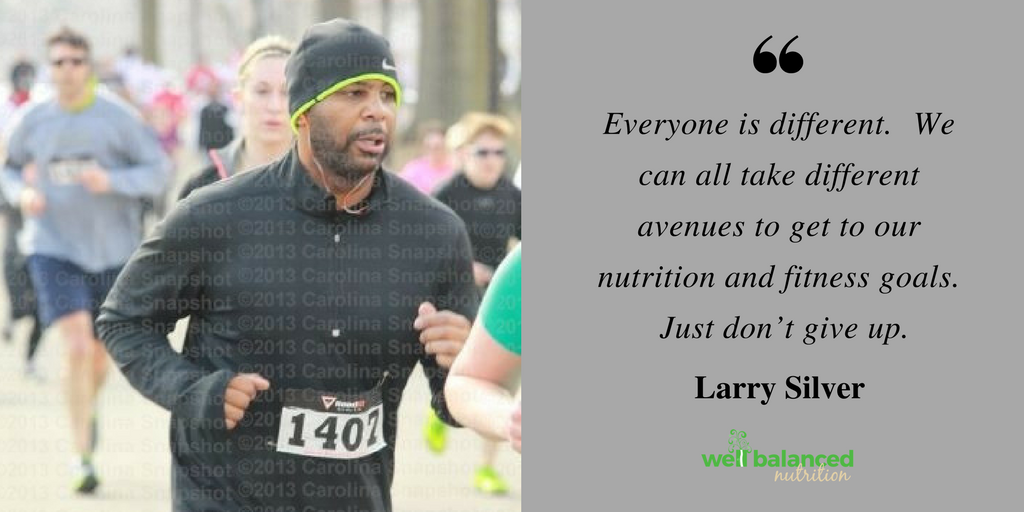
Everyone is different. We can all take different avenues to get to our nutrition and fitness goals. Just don’t give up.”
Are you ready to make a transformation like Larry? Contact us today to set up your own personal wellness adventure. It may be the path you’ve been looking for!

by Lucy | Sep 8, 2017 | Recipes and Meal Ideas
Want a fun way to fill half your plate with vegetables? Look no further! Spaghetti squash appears boring on the outside, but on the inside resembles thin spaghetti noodles once cooked. It’s slightly crunchy and very mild in flavor making it perfect for sauces, seasonings, and add-ins. This recipe brought to you by our lovely intern, Wendy, is an excellent example of how it can be jazzed up with your favorite flavors.
Spaghetti squash is in season now. It contains 40 calories and 7 grams of carbohydrate in each cup. So go ahead, enjoy nature’s noodle! If you have never cooked spaghetti squash before you might find these tips for preparing it helpful.
- 3 chicken breasts cooked and shredded
- 1 cup low-fat buttermilk
- 1 cup buffalo wing sauce
- ½ cup finely diced carrot
- ¼ cup finely diced celery
- ¼ cup finely diced red onion
- 2 cloves minced garlic
- 1 cup shredded low-fat mozzarella
- ½ cup blue cheese crumbles
- 1 large spaghetti squash
- 2 tablespoons olive oil
TO PREPARE SPAGHETTI SQUASH:
Preheat oven to 350 degrees.
With a sharp knife carefully poke a few small slits in the squash skin; poke in a dotted line along where you plan to slice the squash in half. Then microwave squash 4 minutes and let cool slightly.
Cut the spaghetti squash in half, scrape out the seeds, and place on a baking sheet cut side down. Roast for 45 minutes. Set aside to cool.
Increase oven temperature to 425 degrees
When cool enough to hold, scrape the squash out of the skin into a large bowl.
TO PREPARE THE BUFFALO SAUCE
Mince the garlic
Finely dice the carrot, celery, and onion
Heat olive oil in a pan and sauté the vegetables and garlic for about 5 minutes, until they become soft.
Stir in the cooked chicken, buttermilk, and buffalo sauce. Stir to combine. Turn the heat down to low.
Stir in ½ cup of the mozzarella cheese and mix to combine.
FINISH UP BY MIXING THE TWO:
Combine chicken and vegetable mixture with cooked spaghetti squash in a 9x13 baking dish. Top with the remaining mozzarella and blue cheese
Bake, covered with foil, for about 25 minutes.
Remove the foil and continue baking for another 15 minutes, until the entire dish is slightly bubbly and the cheese is starting to brown.
Let cool before serving.
by Lucy | Sep 6, 2017 | Well Balanced Wisdom
That’s a fantastic question. If you feel compelled to go vegetarian, it likely means that you care about your health. We love that about you! You also may realize that eating more plants can help you live longer and fight off disease.
We think it’s awesome that you want to eat healthier and that you want to eat more plants! If a healthy lifestyle is what you are going for, we want to help you do it in a way that serves you best. Cutting out meat and becoming a vegetarian is one way to start eating better, but it’s only part of the picture and not the only way to get healthier. You don’t have to become a total vegetarian to reap the benefits of a plant-centric lifestyle. Below are some suggested steps that can be just as good, if not better in some cases, than going completely vegetarian.
Buy less processed foods and more foods in their natural state. Replacing meat with processed foods of different kinds doesn’t make your diet all that healthier. Oreos, white bread, and Twinkies are all vegetarian but not so nutritious. Just saying. =)
Focus on smaller quantities of higher quality, ethically-raised meats and/or vow to choose more fresh turkey and chicken over sausage, bacon, lunch meats and cured red meat. If the idea of eating more turkey or chicken sounds boring, then perhaps you would benefit from learning to use more fresh or dried herbs to spice up your chicken and turkey dishes. You could even try a cuisine that is new to you. Another way to shake things up is to include more seafood in your routine. Fish is a healthy option a couple of times a week. (EWG’s guide to seafood can be helpful if you are curious about safe and sustainable seafood.)
Implement a few meatless days of the week. To do this well, it may mean you need to experiment with more plant-based sources of protein like lentils, peas, chickpeas, soybeans, hemp seeds or chia seeds. Notice I didn’t say soy burgers. While those are a nice option on occasion, they tend to be highly processed and are less natural than the above choices.
Expand your plant palate. When you eliminate meat, you’ll need to find other sources of protein, and you will still need to fill half your plate with non-starchy vegetables. If plant-foods are limited in your diet now, your goal should be to try new vegetables, fruits, seeds, or legumes. Another idea is to try new methods of preparing ones you already eat. There are over 60 plant foods in-season over the summer months and 55 different plant foods that will be in season come the fall. If you can count the number of plants you eat on your hands, it’s time to expand!
Food for thought:
We encourage you not to focus so much on what you must take out (like meat) and focus more time and effort on what you can add to your plate (more yummy vegetables).
Ready to go vegetarian? If you are ready to follow a vegetarian meal plan, we are here to help! It is possible, and it takes some effort to get the right amount of protein, vegetables, and starches only from plants. We want you to remain balanced!
Is going completely vegetarian not right for you? That’s okay too! You can still eat a plant-centric diet by taking some of the above steps. Plus, we can help!
Start working with us today.
Tell us in the comments below:
What steps will you take or are you taking now?
Do you follow a vegetarian lifestyle? Tell us your favorite tips or tricks!

by Lucy | Sep 3, 2017 | Well Balanced Wisdom
Notice how online you’ll find someone telling you to cut carbs, avoid seed oils, eat only protein, skip breakfast, or never snack after 7 p.m.? No wonder healthy eating feels confusing.
At Well Balanced Nutrition, we believe healthy eating doesn’t have to be complicated. Instead of chasing food rules, we help people build meals that are satisfying, nourishing, and realistic enough to stick with.
The Well Balanced Plate
After reading countless research articles, books such as The Blue Zone Solutions, and a combining over 20 years of professional nutrition experience, Kristen and I recognize the benefits of a mostly plant-based diet incorporating protein, complex carbohydrates, and healthy fat. Eating them in the proportions shown on the Well Balanced Plate helps you feel full and satisfied, not deprived and ridden with cravings. When we eat foods from nature in this way, we can start to trust and rely on our body and mind to remind us what, how much and when to eat.
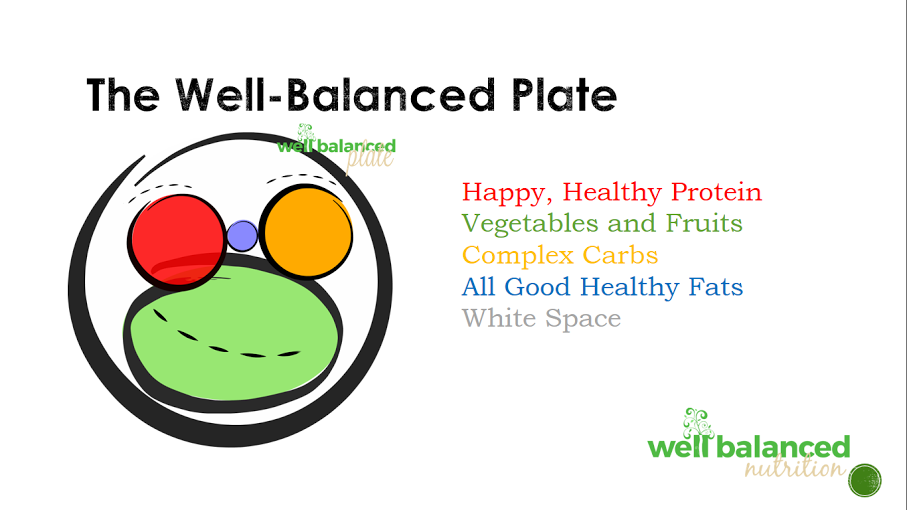
The Well-Balanced Plate was created to visually represent a balanced meal or snack.
Mostly fruits and vegetables
Five populations in the world have the highest concentration of centenarians, people living over 100-years, and they all have something in common: a plant-centric diet. You can read all about their lifestyles in the Blue Zones. Many people who’ve read the book assume you have to be a vegetarian to live a long, vibrant life. In actuality, four of the five communities eat animal protein on a regular basis; however, they make meat more of a side-dish rather than the main course.
You’ll notice that the largest section of the Well-Balanced plate is for vegetables and fruit, not meat or carbs. By filling half of your plate with non-starchy vegetables and fruit, you will not only fill up on fewer calories, but also (and most importantly) get the health benefits of vitamins, minerals, fiber, and phytochemicals.
Vary your Veggies
Kristen wrote more about the benefits of fruits and vegetables in an earlier post and encouraged eating a variety. America is a melting pot of ethnic cultures which means we have many food options at our fingertips. Eating healthfully doesn’t have to be boring. Change things up and try a new vegetable or a different way of cooking, such as implementing Meatless Monday or trying an ethnic dish.
It’s not perfect. It’s flexible and enjoyable.
Well-balanced eating is not perfect. First of all, there will always be celebrations, cookouts, holiday parties, etc. when healthy choices are limited, and in those cases, we make the best decisions at that moment. Secondly, food is enjoyable, and it’s okay to indulge when you decide it’s worth it. Ellyn Satter, an internationally recognized dietitian and feeding therapist, sums it up well when she says, “normal eating is being able to give some thought to your food selection, so you get nutritious food, but not being so wary and restrictive that you miss out on enjoyable food.”
It’s more mindful and less impulsive.
Mindful eating strategies can help us become normal eaters and avoid the point when cravings, emotional eating, and daily life can consistently lead to unhealthy choices that leave our bodies fed but undernourished. Lucy shared HALT, an acronym to explain why our poorest choices tend to happen when we are hungry, angry/frustrated, lonely or tired, and Kristen shared how gathering some DATA can help you cut back on sugar. Another mindful concept is what we call “20% white space“, where we purposefully give ourselves time to check in with our bodies to determine if we are still hungry.
It get’s easier with time
Every time you eat is an opportunity to practice being well-balanced. Eventually, you will no longer have to try so hard because you have practiced for so long.
It means ditching the diet and striving for self-care.
The media keeps reminding us that two out of three American adults are considered overweight or obese, and there’s this pressure to be thin like the women we see in magazines. This messaging, along with the fad diet industry, is creating a culture full of body shame and food guilt. That feels demoralizing.
Many people come to Well-balanced Nutrition with a goal to lose weight. We know that diets don’t really work. Instead of focusing solely on the food, we help people identify the behaviors and patterns that prevent them from reaching a healthy balance. We talk about making small behavior changes to create a compound effect which will result in more energy, confidence, and yes, typically a lower number on the scale. We use weight as a tool, but with the understanding that weight is only a small part of your health picture. Ultimately, we want our WBN tribe to eat well because it feels good and allows them to live a full life not just for that number on the scale.
A way of life
Well-Balanced Nutrition is more than a plate; it’s a way of life. If you have sat down with Kristen or Lucy, you know we talk about much more than what you eat. We ask about who buys and prepares the food, what your typical day looks like, how much sleep you get, your stress level and so on. We even take note of your personality, attitudes, and beliefs. We consider all these things when we work with you to create a well-balanced plan. Each of us comes to the table with a different story, but we all have a desire to be our best selves.
To sum it all up, well-balanced eating means ditching the diet mentality where foods are either good or bad, clean or dirty. Restriction, shame, and guilt should not be the norm. Instead, shift your focus to eating more natural foods and tuning into your body and mind. Eat mostly plants and do something every day that makes you feel good and can help you live your best life.
Ready to start eating well-balanced? “Lettuce” help! 😉
by Lucy | Aug 29, 2017 | Recipes and Meal Ideas
Need an easy weeknight meal? Look no further. Shrimp can be cooked on a skillet in just minutes and when you add steamed veggies and some simple brown rice you’ve got a complete and balanced meal. Did we mention it’s delicious?
Why Shrimp?
It’s a low calorie, protein- and nutrient-rich option. Four ounces of baked or broiled shrimp provides about 25 grams of protein, 135 calories and only 2 grams of fat. Not to mention it contains selenium, vitamin B12, phosphorus, choline, zinc, omega 3 fats and more.
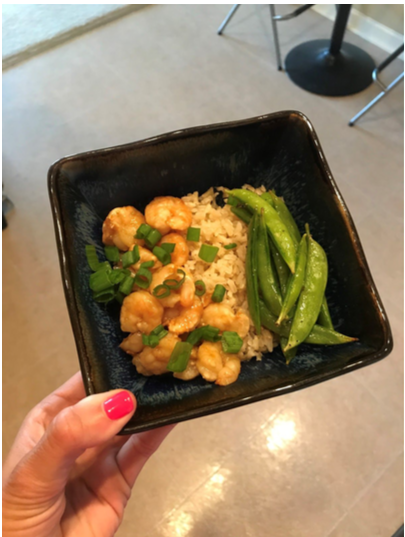
Try this for an easy weeknight meal. You can adjust a few ingredients to make this work with your Paleo or Vegetarian eating plan
Worried about cholesterol?
The 220 milligrams of cholesterol contained in a 4-ounce serving of shrimp may be a concern if you have high cholesterol, but it doesn’t mean you should avoid shrimp. Dietary cholesterol doesn’t affect our cholesterol levels like we once thought. Go ahead and enjoy shrimp in moderation with reasonable portions.
What about mercury?
The Environmental Working Group has a nice guide for safe seafood consumption and classifies shrimp as a low mercury choice. So again, moderation is key.
Ingredients
- 1 pound medium raw shrimp, peeled and deveined
- 1/3 cup honey (or coconut nectar)
- ¼ cup reduced sodium soy sauce (or coconut aminos)
- 1 tablespoon minced garlic
- 2 tablespoons olive oil
- Optional: 1 teaspoon minced fresh ginger
- Optional garnish: chopped green onions
Instructions
- Whisk the honey, soy sauce, garlic, and ginger (optional) together in a medium-sized bowl
- Place shrimp in a large zip-lock bag. Pour ½ of the marinade on top, seal and shake, and allow shrimp to marinate in the refrigerator for at least 15 minutes.
- Heat the olive oil in a skillet over medium-high heat. Place shrimp in skillet, cook on one side until no longer pink, about 45 seconds, then flip over. Pour in the remaining marinade and cook until shrimp is cooked through, about 1 minute more.
- Top shrimp with the optional green onions for garnish.
We recommend enjoying this with a 1/3 – 1/2 cup serving of brown rice and 1 cup steamed vegetables for a Well Balanced Meal!
ALTERNATIVES:
- For a Paleo dish use coconut aminos in place of soy sauce.
- For vegetarian use the honey ginger marinade with tofu instead of shrimp!
- If you don’t like fish use the honey ginger marinade with chicken breasts cut into small bite-size pieces and sautee in the pan.
- 1 pound medium raw shrimp peeled and deveined
- 1/3 cup honey
- ¼ cup soy sauce reduced sodium
- 1 tablespoon garlic minced
- 2 tablespoons olive oil
- 1 teaspoon ginger minced (optional)
- Optional garnish: chopped green onions
Whisk the honey, soy sauce, garlic, and ginger (optional) together in a medium-sized bowl
Place shrimp in a large zip-lock bag. Pour ½ of the marinade on top, seal and shake, and allow shrimp to marinate in the refrigerator for at least 15 minutes.
Heat the olive oil in a skillet over medium-high heat. Place shrimp in skillet, cook on one side until no longer pink, about 45 seconds, then flip over. Pour in the remaining marinade and cook until shrimp is cooked through, about 1 minute more.
Top shrimp with the optional green onions for garnish.